
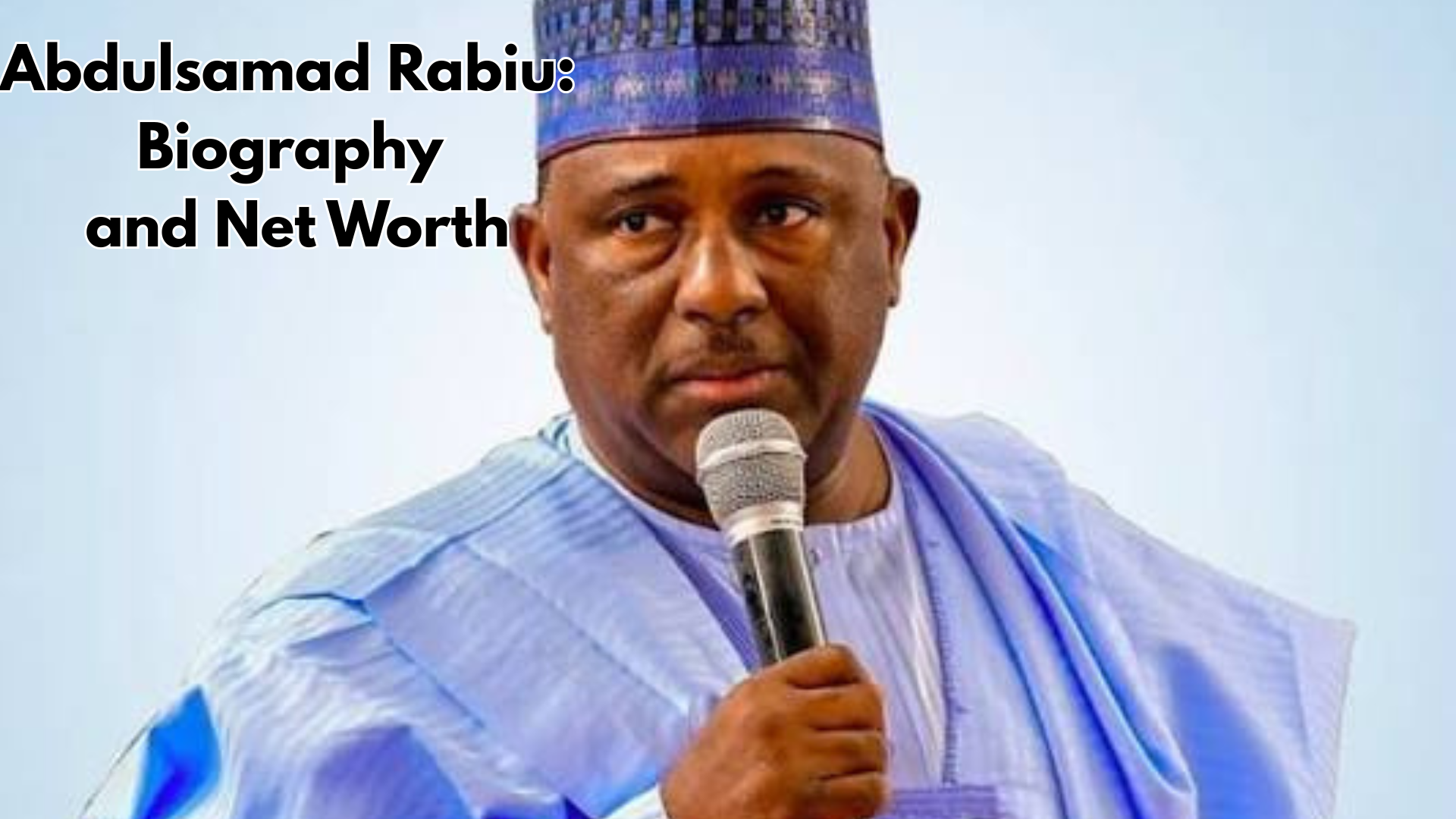
Abdulsamad Rabiu Biography and Net Worth: Age, Early Life, Education, Career, BUA Group, Family and Facts
Before he became one of Africa’s richest industrialists, Abdulsamad Rabiu was a young economics graduate who returned to Nigeria and stepped into a family business facing serious difficulties. Rather than simply preserve what he inherited, he took a different path—building BUA from a trading company into a major industrial group with interests in cement, food manufacturing, and infrastructure. His journey from commodity trading to a multibillion-dollar business empire is a story of risk, reinvention, and long-term industrial ambition.
Today, Rabiu is the founder and chairman of BUA Group, one of Nigeria’s major industrial conglomerates. His businesses include BUA Cement and BUA Foods, with interests across cement, sugar, flour, rice, edible oils, infrastructure, and related sectors.
His rise has also been accompanied by a dramatic increase in wealth. Forbes’ real-time estimate puts his net worth at approximately $12.6 billion as of August 26, 2026, although wealth estimates can fluctuate with the value of publicly traded holdings, according to Forbes
But the story behind that figure includes much more than today’s billionaire ranking. It involves a young man returning to Nigeria from the United States, taking responsibility for a family business during a difficult period, founding BUA in 1988, and gradually shifting from importing commodities to producing essential goods locally.
KEY TAKEAWAYS
- Abdulsamad Isyaku Rabiu was born on August 4, 1960, in Kano, Nigeria.
- He studied Economics at Capital University in Columbus, Ohio, USA.
- He returned to Nigeria and became involved in the family business before founding BUA in 1988.
- BUA initially focused on commodity trading before expanding into manufacturing.
- His businesses eventually grew into major operations in cement, sugar, food processing and infrastructure.
- BUA Cement and BUA Foods are publicly listed companies.
- Forbes estimates Rabiu’s real-time net worth at approximately $12.6 billion as of August 26, 2026.
- His wealth is largely connected to his ownership of BUA’s publicly traded companies and other business interests.
- He has also committed substantial resources to philanthropy through the BUA Foundation and ASR Africa.
- His career demonstrates the transition from trading commodities to building domestic manufacturing capacity.
Quick Facts About Abdulsamad Rabiu
| Fact | Details |
|---|---|
| Full name | Abdulsamad Isyaku Rabiu |
| Date of birth | August 4, 1960 |
| Age in 2026 | 66 years |
| Place of birth | Kano, Nigeria |
| State of origin | Kano State |
| Nationality | Nigerian |
| Profession | Businessman, industrialist and philanthropist |
| Education | Capital University, Columbus, Ohio |
| Degree | Economics |
| Father | Khalifah Isyaku Rabiu |
| Major company | BUA Group |
| Founded BUA | 1988 |
| Major businesses | BUA Cement, BUA Foods |
| Major sectors | Cement, food manufacturing, sugar, infrastructure and agriculture |
| National honours | CFR and CON |
| Current role | Founder and Chairman, BUA Group |
| Estimated net worth, 2026 | $12.6 billion, according to Forbes’ real-time estimate |
Who Is Abdulsamad Rabiu?
Abdulsamad Rabiu is a Nigerian businessman, industrialist, and philanthropist. He is best known as the founder and chairman of BUA Group, a diversified Nigerian conglomerate with businesses spanning manufacturing, infrastructure, agriculture, and food production.
BUA’s operations include cement production, sugar refining, flour and pasta, and other industrial activities. His business career began in trading, but his long-term strategy increasingly focused on manufacturing.
Rather than remaining primarily an importer of goods, BUA under Rabiu expanded into producing some of the products Nigeria had traditionally depended heavily on imports to obtain.
This strategy eventually made BUA one of Nigeria’s most important indigenous industrial groups.
Early Life and Family Background
Abdulsamad Isyaku Rabiu was born on August 4, 1960, in Kano, shortly before Nigeria gained independence.
He was born into a prominent business family.
His father, Khalifah Isyaku Rabiu, was a major Nigerian businessman whose commercial interests included commodities and manufacturing.
Growing up in that environment exposed Abdulsamad to business at an early age.
However, his later career was not simply a continuation of his father’s business.
After completing his education in the United States, Rabiu returned to Nigeria and became involved in the family enterprise at a particularly difficult period.
Education
Rabiu received his early education in Nigeria before travelling to the United States for university.
He studied Economics at Capital University in Columbus, Ohio, graduating in 1984. BUA’s corporate records confirm his economics degree and his subsequent return to Nigeria to join the family business.
Studying economics provided him with a foundation in markets, trade, finance, and business decision-making.
Returning to Nigeria at a Difficult Time
After completing his studies, Rabiu returned to Nigeria. According to available records, his return coincided with a difficult period for his family business.
His father had become involved in a dispute with the military government concerning allegations related to rice import duties and was detained. Contemporary accounts of Rabiu’s life describe the young businessman taking on greater responsibility for the family enterprise during this period.
Instead of beginning his career under ideal circumstances, Rabiu found himself dealing with the realities of running a business in a difficult economic and political environment.
The experience exposed him to risk, regulation, commodity markets, and the pressures involved in keeping a business operating.
A MAJOR LESSON FROM HIS EARLY YEARS
Success is not always built when circumstances are favourable. Sometimes responsibility arrives before a person feels completely prepared for it.
Founding BUA Group
In 1988, Rabiu established BUA International Limited, which became the foundation of what is now BUA Group.
The company initially focused on the importation and trading of commodities, including:
- Rice
- Edible oils
- Flour
- Iron and steel products
- Agricultural materials
- Industrial chemicals
But Rabiu gradually began looking beyond importing products into Nigeria. He saw an opportunity to invest in the production of those goods locally.
From Trading to Manufacturing
The transformation of BUA from a trading company into an industrial conglomerate did not happen overnight.
Rabiu gradually expanded into manufacturing and processing. One of the early significant acquisitions was Nigerian Oil Mills Limited in 2001, which BUA acquired when it was one of the country’s major edible-oil processing businesses.
BUA subsequently expanded into flour milling, sugar refining, and other food-processing activities.
BUA’s Entry Into Sugar
BUA expanded significantly into sugar refining. In 2008, the company commissioned a major sugar refinery in Nigeria. The investment reflected Rabiu’s growing emphasis on manufacturing and processing rather than simply trading imported goods.
Soon, sugar became one of the important components of BUA’s food business and eventually contributed to the creation of BUA Foods.
READ ALSO Shallipopi Biography, State of Origin, Net Worth, and Full Life Story
Entry Into the Cement Industry
The cement industry became perhaps the most transformative part of Rabiu’s industrial strategy. In 2009, BUA acquired a controlling stake in the publicly listed Cement Company of Northern Nigeria (CCNN), commonly associated with Sokoto Cement. Rabiu subsequently expanded BUA’s cement manufacturing capacity.
The company also developed a major cement manufacturing complex at Obu-Okpella in Edo State, with the first phase of that historic investment representing more than $1 billion, according to BUA’s corporate records.
The project was significant because cement is one of the basic materials required for roads, housing, factories, and other infrastructure.
BUA’s expansion therefore placed Rabiu in one of Nigeria’s most strategically important manufacturing industries.
The Creation of BUA Cement
In January 2020, Rabiu merged his privately owned Obu Cement with Cement Company of Northern Nigeria.
The combined company became BUA Cement Plc and was listed on the Nigerian Exchange.
This restructuring brought a major portion of Rabiu’s cement interests into a publicly traded company.
According to Forbes, Rabiu owns approximately 98.2% of BUA Cement. The listing later became extremely important to his personal wealth because the market value of his stake could be measured publicly.
BUA Foods
Rabiu’s food businesses were subsequently consolidated under BUA Foods Plc.
The company includes businesses involved in areas such as:
- Sugar
- Flour
- Pasta
- Rice
- Edible oils
The listings of BUA Cement and BUA Foods changed the way investors and analysts could assess the value of Rabiu’s business empire.
Instead of being based largely on estimates of private-company assets, a significant portion of his wealth became connected to publicly traded shares.
Major Challenges and Setbacks
Building Manufacturing Capacity in Nigeria
One of Rabiu’s biggest challenges has been the difficulty of establishing large-scale manufacturing operations in Nigeria.
Industrial businesses require enormous amounts of capital, reliable electricity, transportation infrastructure, skilled labour, raw materials and access to markets.
Nigeria’s infrastructure challenges make this particularly demanding.
Building cement plants and food-processing facilities therefore required long-term investment rather than quick returns.
Rabiu’s strategy involved committing substantial capital to production capacity even when the economic environment was difficult.
Moving Beyond an Import-Based Business
Another challenge was transforming BUA’s identity.
The company began as a trading business.
Moving into manufacturing required different expertise, technology, management structures, and capital requirements.
The transition therefore carried significant risk.
The eventual success of BUA’s cement and food businesses suggests that Rabiu was able to manage that transformation over several decades.
Competing in Nigeria’s Industrial Market
BUA did not develop in an empty market.
The company operates alongside other major Nigerian industrial groups, including Dangote Industries and Flour Mills of Nigeria.
Cement, sugar, and food manufacturing are capital-intensive industries where scale can strongly influence competitiveness.
BUA’s strategy has therefore involved continually increasing production capacity and improving integration across its businesses.
READ ALSO Who was Dolly Parton? Biography, Age, Early Life, Education, Career, Husband, Net Worth and Facts
Major Triumphs and Achievements
Building BUA Into a Major Conglomerate
The transformation of BUA from a commodity-trading company into a diversified industrial group is Rabiu’s defining achievement.
The group now has interests across multiple sectors, including cement, food manufacturing, and infrastructure.
Building One of Nigeria’s Largest Cement Businesses
BUA Cement has become one of Nigeria’s leading cement producers.
According to BUA’s 2024 annual report, the company’s total production capacity reached 17 million metric tonnes per annum, making it Nigeria’s second-largest cement producer.
That expansion required years of investment in factories, infrastructure and logistics.
Successfully Listing BUA Cement
The 2020 listing of BUA Cement was another major milestone.
It provided public-market access to the company while allowing investors to participate in one of Nigeria’s largest cement businesses.
Listing BUA Foods
The 2022 listing of BUA Foods further expanded Rabiu’s publicly traded business interests.
Together, BUA Cement and BUA Foods became important components of his personal wealth.
Becoming One of Africa’s Wealthiest Industrialists
Rabiu’s industrial expansion has translated into enormous growth in his estimated wealth.
Forbes’ 2026 Africa billionaires ranking estimated his wealth at $11.2 billion in March 2026, up substantially from the previous year.
By August 26, Forbes’ real-time estimate had risen to approximately $12.6 billion, according to available records from Forbes
THE BIG LESSON
Rabiu’s rise demonstrates the difference between trading a product and building the capacity to produce it. His greatest expansion came when BUA moved deeper into manufacturing.
Abdulsamad Rabiu’s Net Worth in 2026
As of August 26, 2026, Forbes estimates Abdulsamad Rabiu’s real-time net worth at approximately $12.6 Billion
A substantial part of Rabiu’s wealth is connected to his ownership of publicly traded Nigerian companies, particularly BUA Cement and BUA Foods.
Because their share prices change, his estimated net worth can also change.
Forbes currently reports that Rabiu owns approximately 98.2% of BUA Cement and 95% of BUA Foods.
Earlier in March 2026, Forbes’ Africa billionaires ranking estimated his wealth at $11.2 billion. The difference illustrates how quickly billionaire wealth estimates can change when stock prices move. (Billionaires.Africa)
Abdulsamad Rabiu Net Worth 2026
| Source/date | Estimated net worth |
|---|---|
| Forbes Africa billionaires list—March 2026 | $11.2 billion |
| Forbes real-time estimate—August 26, 2026 | $12.6 billion |
Forbes estimates Abdulsamad Rabiu’s net worth at about $12.6 billion as of August 26, 2026.
How Abdulsamad Rabiu Made His Money
Rabiu’s wealth comes primarily from his ownership and control of BUA’s industrial businesses.
Cement
BUA Cement is one of his most important assets.
The company manufactures cement at several plants and has expanded production capacity substantially over the years.
Food Manufacturing
BUA Foods is another major component of his wealth.
The company operates across sugar, flour, pasta, rice and edible oils.
Infrastructure
BUA has also developed interests in infrastructure, logistics and related industrial projects.
Agriculture and Raw Materials
The group’s activities include agricultural processing and related supply chains.
The overall strategy is one of vertical integration—controlling more parts of the production and distribution process rather than depending entirely on imports.
Philanthropy
Rabiu has also developed a substantial philanthropic profile.
His philanthropic activities are conducted through organisations including the BUA Foundation and the Abdul Samad Rabiu Africa Initiative (ASR Africa).
His giving has covered areas such as:
- Healthcare
- Education
- Water and sanitation
- Sports
- Infrastructure
- Community development
ASR Africa has funded projects across different Nigerian states and institutions.
Some of the initiatives have involved university infrastructure, hospitals and other public-benefit projects.
The philanthropic side of Rabiu’s career has therefore grown alongside his business activities.
National Honours and Recognition
Rabiu has received two major Nigerian national honours:
- Commander of the Order of the Niger (CON)
- Commander of the Order of the Federal Republic (CFR)
He has also received recognition from business organizations for his contribution to African industry.
In 2016, he received the African Industrialist of the Year Award at the All-Africa Business Leaders Awards. (Bua Foods Plc)
He also serves as the inaugural president of the France-Nigeria Business Council. (Bua Foods Plc)
Personal Life and Family
Abdulsamad Rabiu comes from the prominent Rabiu business family.
His father, Khalifah Isyaku Rabiu, was an established industrialist and businessman.
Rabiu has children, some of whom have become involved in the wider BUA business empire.
His son Kabiru Rabiu is a senior executive within BUA Group.
Kabiru has held leadership roles within the group and has been involved in its food and industrial businesses.
Rabiu has generally maintained a relatively private personal life compared with some other high-profile Nigerian billionaires.
Abdulsamad Rabiu and BUA’s Future
Rabiu’s current strategy is increasingly focused on expanding BUA’s manufacturing capacity.
The company has continued investing in cement production and food manufacturing while developing infrastructure around its industrial operations.
The underlying philosophy is consistent with the strategy Rabiu has pursued for decades:
Nigeria has a large population and therefore a large domestic market for essential goods.
If those goods can be manufactured competitively within Nigeria, the opportunity is enormous.
That philosophy explains why cement and food have become central to his empire.
Interesting Facts About Abdulsamad Rabiu
- Abdulsamad Rabiu was born on August 4, 1960.
- He was born in Kano, Nigeria.
- His father was businessman Khalifah Isyaku Rabiu.
- He studied Economics at Capital University in Columbus, Ohio.
- He returned to Nigeria after completing his studies.
- He became involved in his family’s business at a relatively young age.
- He founded BUA International in 1988.
- BUA initially focused on commodity trading.
- The company later expanded into manufacturing.
- BUA acquired Nigerian Oil Mills Limited in 2001.
- BUA commissioned a major sugar refinery in 2008.
- Rabiu acquired a controlling interest in Cement Company of Northern Nigeria in 2009.
- His Obu Cement business later became part of BUA Cement.
- BUA Cement was listed on the Nigerian Exchange in 2020.
- BUA Foods was listed in 2022.
- Forbes says Rabiu owns approximately 98.2% of BUA Cement.
- Forbes says he owns approximately 95% of BUA Foods.
- BUA Cement’s reported production capacity reached 17 million tonnes per year by 2024.
- Rabiu has received both CFR and CON national honours.
- He established the Abdul Samad Rabiu Africa Initiative.
- He has supported education, healthcare, water and sanitation projects.
- He is one of Africa’s wealthiest industrialists.
- Forbes estimated his wealth at $11.2 billion in March 2026.
- Forbes’ real-time estimate reached approximately $12.6 billion on August 26, 2026.
Frequently Asked Questions About Abdulsamad Rabiu
How old is Abdulsamad Rabiu?
Abdulsamad Rabiu was born on August 4, 1960. He is 66 years old in 2026.
Where is Abdulsamad Rabiu from?
He was born in Kano, Nigeria, and is from Kano State.
Who is Abdulsamad Rabiu’s father?
His father was Khalifah Isyaku Rabiu, a prominent Nigerian businessman and industrialist.
What did Abdulsamad Rabiu study?
He studied Economics at Capital University in Columbus, Ohio, United States.
When did Abdulsamad Rabiu start BUA?
He established BUA International Limited in 1988.
What does BUA Group do?
BUA Group has interests in cement, sugar, food manufacturing, infrastructure, agriculture, logistics and related industrial activities.
What companies does Abdulsamad Rabiu own?
His major publicly traded interests include BUA Cement Plc and BUA Foods Plc. He also controls the wider BUA Group.
How much is Abdulsamad Rabiu worth in 2026?
Forbes’ real-time estimate puts his net worth at approximately $12.6 billion as of August 26, 2026.
Is Abdulsamad Rabiu richer than Aliko Dangote?
No. Based on Forbes’ August 2026 real-time estimate, Aliko Dangote remains significantly wealthier than Rabiu.
What is Abdulsamad Rabiu known for?
He is best known for transforming BUA from a commodity-trading company into a major Nigerian industrial conglomerate, particularly through cement and food manufacturing.
What is ASR Africa?
The Abdul Samad Rabiu Africa Initiative (ASR Africa) is Rabiu’s philanthropic initiative, supporting projects in areas including healthcare, education, water and sanitation, sports and infrastructure.
Final Thoughts
Abdulsamad Rabiu’s story is fundamentally a story of industrial transformation.
He entered business through a family enterprise and later established BUA in 1988 as a trading company. Over the following decades, however, he moved beyond importing and trading commodities and invested heavily in manufacturing.
That decision changed the scale of his business.
BUA expanded into edible oils, flour, sugar and eventually cement. The creation and public listing of BUA Cement and BUA Foods gave Rabiu major publicly traded assets and helped make his wealth increasingly visible to international investors.
His rise has not been without challenges. Building large manufacturing facilities in Nigeria requires enormous capital and long-term commitment in an environment where infrastructure and economic conditions can be difficult.
Yet the results have been substantial.
By 2026, BUA Cement had reached a reported production capacity of 17 million tonnes annually, while BUA Foods had become one of the country’s major food-manufacturing companies. (buacement.com)
Forbes’ real-time estimate of Rabiu’s wealth reached $12.6 billion on August 26, 2026, placing him among Africa’s richest industrialists. (Forbes)
But perhaps the most important lesson from his career is not the size of his fortune.
It is the decision to move from selling what Nigeria imported to investing in what Nigeria could produce.
FINAL LESSON
The biggest businesses are not always built by finding something completely new. Sometimes they are built by looking at what millions of people already need every day—and building the capacity to supply it at scale.
Last updated: August 26, 2026
Sources
- Forbes — Abdulsamad Rabiu Profile
Current real-time net worth, BUA Cement and BUA Foods ownership, business interests and wealth information. - Forbes Africa — 2026 Africa’s Richest People
2026 African billionaire rankings and Rabiu’s estimated wealth. - BUA Cement Plc — 2024 Annual Report
Rabiu’s biography, BUA’s history, cement operations, production capacity and corporate development. - BUA Cement Plc — 2023 Annual Report
Rabiu’s education, early career, establishment of BUA and expansion into manufacturing. - BUA Foods Plc — Abdulsamad Rabiu Profile
Rabiu’s background, BUA Group history, national honours and philanthropic activities. - BUA Foods Plc — Listing Memorandum
Rabiu’s educational background, establishment of BUA International and business interests. - Nairametrics — “Abdulsamad Rabiu: Exploring the journey of Nigeria’s silent billionaire @ 60”
Early life, family background and return to Nigeria. - Billionaires.Africa — “Abdul Samad Rabiu is now Africa’s 3rd richest man”
Forbes’ March 2026 ranking and changes in Rabiu’s estimated wealth. - Billionaires.Africa — “Bloomberg says Abdul Samad Rabiu is Africa’s 2nd richest man…”
Comparison of Bloomberg and Forbes’ 2026 wealth estimates and methodology. - BUA Group / BUA Foundation / ASR Africa
Information on Rabiu’s philanthropic activities and social-development initiatives.