
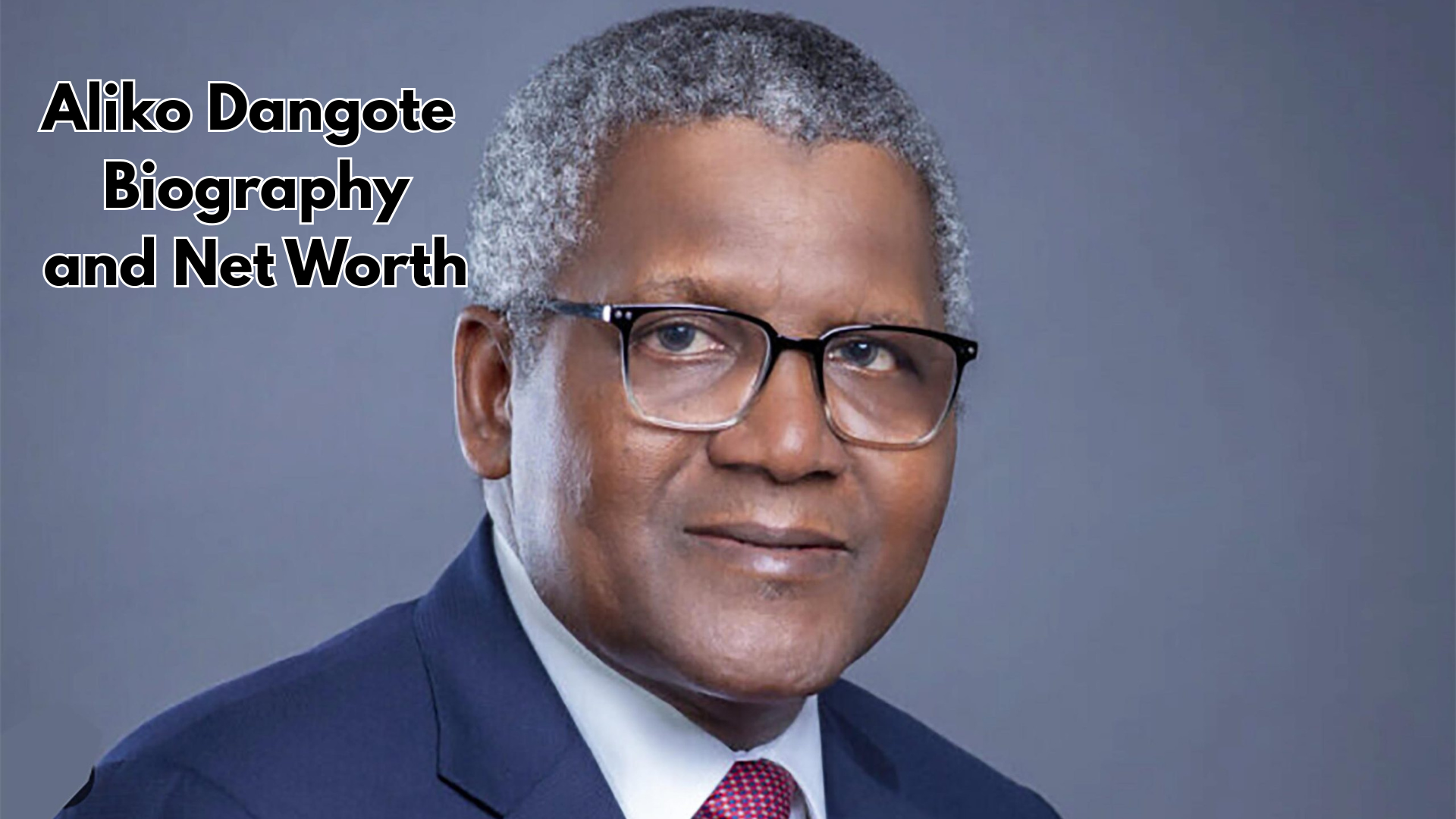
Aliko Dangote Biography and Net Worth 2026 Updated: Age, Education, Business, Dangote Refinery, and Facts
A businessman who began by trading basic commodities has built one of Africa’s largest industrial empires, and in 2026 his biggest project is no longer simply a symbol of personal wealth but an increasingly important part of Nigeria’s energy economy. Aliko Dangote is Africa’s richest person and is now overseeing a business empire that stretches across cement, sugar, fertilizer, petrochemicals, refining, and other industries, while his flagship refinery in Lagos has reached its initial full operating capacity and is preparing for a proposed public offering that could become one of Africa’s largest IPOs. Reuters reported on August 26, 2026, that the Dangote Refinery is preparing for an IPO expected to raise about $5 billion, while the refinery is operating at its initial full capacity of 650,000 barrels per day and has already tested output of 700,000 barrels per day.
His financial position has also changed considerably as the refinery has become operational and Dangote Cement has continued to perform strongly. Forbes’ real-time estimate puts Aliko Dangote’s net worth at about $31.3 billion as of August 27, 2026, although that number changes with market movements and the value of his publicly traded holdings. Forbes’ March 2026 Africa billionaires list had valued him at $28.5 billion, making him not only Africa’s richest person but also the richest Black person on its 2026 list.
The scale of his business empire is particularly striking because Dangote did not begin with a multinational manufacturing company or an inherited industrial corporation. He started as a young trader, using family-backed capital to enter the commodities business, and gradually moved from importing products to manufacturing them locally. Over several decades, that strategy transformed the Dangote name from a trading business into one of the most recognizable corporate brands in Africa, with the group now operating across multiple African countries and employing tens of thousands of people.
KEY TAKEAWAYS
- Aliko Dangote was born on April 10, 1957, in Kano, Nigeria.
- He comes from a prominent Kano business family with deep commercial roots.
- He studied Business Studies at Al-Azhar University in Cairo, Egypt.
- He began his business career in the late 1970s by trading commodities.
- His early businesses included rice, sugar, cement, flour and other basic commodities.
- Dangote Group was established as a trading business in 1981 before evolving into a manufacturing conglomerate.
- His greatest business transformation came from moving from importing products to producing them locally.
- Dangote Cement became Africa’s leading cement producer, with operations in 11 African countries and capacity of up to 55 million tonnes annually as of 2025.
- The Dangote Fertilizer plant in Lagos is one of Africa’s largest granulated urea fertilizer facilities.
- The Dangote Petroleum Refinery is Africa’s largest refinery and the world’s largest single-train refinery.
- The refinery began operations in 2024 and is currently operating at an initial full capacity of about 650,000 barrels per day.
- Dangote has announced plans to expand the refinery’s capacity and has also expressed interest in major refining projects elsewhere in Africa.
- Forbes estimates his 2026 real-time net worth at approximately $31.3 billion as of August 27, 2026.
- He remains Africa’s richest person and the richest Black person on Forbes’ 2026 list.
- He has three biological daughters and an adopted son, according to publicly available biographical records.
- He is divorced and has generally kept his private family life away from the public spotlight.
- Through the Aliko Dangote Foundation, he has supported healthcare, nutrition, education and humanitarian initiatives.
- His career has also involved major risks, especially the enormous financial and logistical challenges associated with building the Dangote Refinery.
Quick Facts About Aliko Dangote
| Fact | Details |
|---|---|
| Full name | Aliko Mohammad Dangote |
| Date of birth | April 10, 1957 |
| Age in 2026 | 69 years |
| Place of birth | Kano, Nigeria |
| Nationality | Nigerian |
| Profession | Businessman, industrialist, and philanthropist |
| Education | Business Studies |
| University | Al-Azhar University, Cairo, Egypt |
| Business | Dangote Group |
| Founded business | 1978/1981, depending on whether the early trading activity or formal group history is used |
| Main sectors | Cement, sugar, fertilizer, oil refining, petrochemicals, food and infrastructure |
| Residence | Lagos, Nigeria |
| Marital status | Divorced |
| Children | 3 biological children and an adopted son, according to published biographical records |
| 2026 Forbes net worth | Approximately $31.3 billion, real-time estimate |
| Forbes Africa ranking | No. 1 |
| Source of wealth | Cement, sugar and diversified manufacturing |
| Major project | Dangote Petroleum Refinery |
| Refinery capacity | 650,000 barrels per day initial full capacity; 700,000 bpd tested |
| Major philanthropic vehicle | Aliko Dangote Foundation |
Who Is Aliko Dangote?
Aliko Dangote is a Nigerian businessman, industrialist, and philanthropist who founded and leads the Dangote Group, one of West Africa’s largest business conglomerates. His business career has been built primarily around the production and distribution of essential goods, including cement, sugar, and fertilizer, before expanding into petroleum refining and petrochemicals. Dangote Industries describes the group as a diversified business with operations across sectors that include cement, sugar, salt, packaging, energy, fertilizer, infrastructure, and petrochemicals.
What distinguishes Dangote’s business story is the gradual transformation from trading to manufacturing. His early business involved buying and selling commodities, but he eventually recognised that the greater opportunity was not simply to import products into Nigeria but to build factories capable of producing those products locally. That philosophy became central to the development of Dangote Cement, Dangote Sugar, Dangote Fertilizer, and eventually the Dangote Refinery, with the broader objective of increasing local production, reducing dependence on imports, and creating industrial capacity within Africa.
Early Life and Family Background
Aliko Mohammad Dangote was born on April 10, 1957, in Kano, which was then part of British Nigeria. He was born into a commercially influential family, and business was already an important part of his family environment long before he established his own company. His maternal great-grandfather, Alhassan Dantata, was a prominent West African businessman whose trading activities included commodities such as kola nuts and groundnuts, while his maternal grandfather, Sanusi Dantata, also played an important role in Dangote’s upbringing.
Dangote’s father, Mohammed Dangote, was also involved in business and operated a transport company, while his mother, Mariya, came from the Dantata family and was involved in business and philanthropy. Dangote’s early exposure to commercial activity, therefore, came from a family in which trade, enterprise, and financial responsibility were familiar parts of life, although the enormous industrial scale of the business empire he would later create was not simply handed to him in the form of an established multinational corporation.
His father died when Dangote was still a child, after which his maternal grandfather and uncle became important influences in his development. Later accounts of his childhood frequently mention his entrepreneurial instincts, including the story that he bought sweets and sold them through classmates when he was young, keeping the profits from the activity. Forbes has also highlighted this story as an early indication of the commercial instincts that would later define his career.
Education
Dangote received his early education in Kano and later attended Government College, Birnin Kudu, before travelling to Egypt for university. He studied Business Studies at Al-Azhar University in Cairo, where he developed a formal academic foundation in business and administration before returning to Nigeria to pursue his commercial ambitions.
His education was important, but his subsequent business development depended heavily on practical experience. Rather than entering the corporate world after university and gradually climbing an established professional ladder, he returned to Nigeria and began building a trading operation that would eventually become the foundation of the Dangote Group.
How Aliko Dangote Started His Business Career
Dangote began his business career in the late 1970s, when Nigeria was experiencing substantial demand for commodities and construction materials. He obtained financial support from his family to begin trading, and accounts of his early career describe a loan of about N500,000, which was equivalent to roughly $500,000 at the time, according to Dangote’s own recollection in an IFC interview.
READ ALSO Who is Shola Akinlade? Biography, Net Worth, Education, Paystack, and Facts
His early trading activities involved commodities such as rice, sugar and cement, and he quickly discovered that there was significant demand for construction materials in Nigeria. His uncle was already involved in the cement business, giving Dangote an opportunity to learn the trade while also gaining access to supply arrangements. According to Dangote’s own recollection, he was receiving several truckloads of cement daily and selling to customers who were prepared to pay for the product before taking delivery.
This period was important because it exposed him to a lesson that would later become central to his business strategy: large markets create opportunities when supply is insufficient, but the greatest long-term opportunity may lie in controlling the production and distribution infrastructure rather than remaining merely an intermediary.
The Beginning of Dangote Group
The corporate history of the Dangote Group generally traces its formal beginning to 1981, when the business was established as a trading company focused on imported cement and other commodities such as rice, sugar, flour,32q and salt. The business subsequently expanded into manufacturing, gradually reducing its dependence on imported finished goods.
During its early years, Dangote’s company imported products into Nigeria and distributed them through an expanding network. This model generated capital and market knowledge, but Dangote eventually moved toward a more ambitious strategy in which the company would manufacture products itself.
From Trader to Manufacturer
Dangote’s transformation from commodity trader into industrialist did not happen overnight, but it changed the trajectory of his business. During the 1990s, the group increasingly moved into manufacturing, and the strategy eventually produced major investments in cement, sugar and other industries. Dangote Cement’s corporate history describes this period as the point at which the group made a strategic decision to move from a trading-based operation into an integrated manufacturing business.
The logic was straightforward but difficult to execute: Nigeria had a huge population and growing demand for essential goods, yet many of those goods were being imported. If Dangote could establish efficient domestic production facilities, the company could capture more of the value chain while helping to reduce import dependence.
That approach eventually became the foundation for the enormous manufacturing infrastructure associated with the Dangote name.
Building Dangote Cement
Cement became one of the most important pillars of Dangote’s fortune and remains central to the group’s identity. The company began manufacturing cement in Nigeria in 2007, with the Obajana plant in Kogi State becoming its flagship operation. Over time, Dangote Cement expanded both its Nigerian production base and its operations across other African countries.
Today, Dangote Cement is Africa’s leading cement producer, with operations in 11 African countries and production capacity of up to 55 million tonnes per year as of 2025. Its operations extend across countries including Nigeria, Cameroon, Congo, Ethiopia, Ghana, Senegal, Sierra Leone, South Africa, Tanzania, Zambia and Ivory Coast.
Expansion Into Sugar
Dangote also built a major position in the Nigerian sugar industry through Dangote Sugar Refinery. Its Apapa refinery in Lagos has an installed refining capacity of approximately 1.44 million tonnes per year, making it one of the largest sugar-refining facilities in Sub-Saharan Africa. The company also operates sugar-cane cultivation and milling projects as part of its effort to increase local production.
Dangote Fertilizer
The group’s expansion into fertilizer represented another major step into strategic industrial production. The Dangote Fertilizer plant in Lagos is described by the company as Africa’s largest granulated urea fertilizer complex and occupies approximately 500 hectares in the Lekki Free Trade Zone. The project was built at a reported cost of about $2.5 billion.
The Dangote Refinery
The most ambitious project of Dangote’s career is undoubtedly the Dangote Petroleum Refinery and Petrochemical Complex in Lagos.
The refinery was conceived as a response to a longstanding structural problem in Nigeria: the country produces crude oil but has historically depended heavily on imported refined petroleum products because domestic refining capacity was inadequate. Dangote sought to build a refinery capable of processing crude oil at enormous scale and supplying petroleum products to Nigeria and international markets.
Construction began in 2016, although the broader project development process had started earlier. The facility was eventually inaugurated in 2023 and began refining operations in early 2024. Its designed capacity is approximately 650,000 barrels of crude oil per day, making it Africa’s largest refinery and the world’s largest single-train refinery.
The refinery is located on a massive site in the Lekki Free Zone and forms part of an integrated complex that includes petrochemical and fertilizer operations. Its scale makes it one of the most significant private-sector industrial investments ever undertaken in Africa.
KEY TAKEAWAY: THE REFINERY WAS MORE THAN A BUSINESS PROJECT
The Dangote Refinery represents the clearest example of Dangote’s transition from commodity trading to industrial infrastructure. Rather than simply importing petroleum products for resale, the project attempts to place Nigeria inside more stages of the petroleum value chain, from crude processing to refined products and petrochemicals.
The $20 Billion-Plus Bet
Building the refinery became one of the most financially demanding projects of Dangote’s career. What began as an enormous investment ultimately cost more than $20 billion, with the final cost substantially exceeding some of the project’s earlier estimates. Forbes has described the refinery as a $23 billion investment and reported Dangote’s own description of the undertaking as the biggest risk of his life.
The project encountered numerous logistical and financial complications, including the enormous task of reclaiming and preparing the site, developing supporting infrastructure, constructing a private port and obtaining specialised equipment. Forbes reported that approximately 365 million cubic metres of sand had to be moved during the development of the site, while the project required a 5,000-ton crane of a type available in only a handful of locations worldwide.
These challenges meant that the refinery took years longer than many observers initially expected and required substantially more capital than originally anticipated.
Major Challenges and Setbacks
The Cost and Delay of the Refinery
The refinery was perhaps the biggest gamble of Dangote’s career because it required him to commit enormous amounts of capital to a project that took many years before producing commercial output. The project’s cost escalated dramatically, while construction delays created uncertainty about when the investment would begin generating returns. Forbes described the project as a risky $23 billion undertaking, while Reuters has reported that the final cost exceeded $20 billion.
For an entrepreneur whose fortune was already tied heavily to manufacturing, committing such a large amount of capital to one industrial project created considerable financial exposure. Dangote himself has acknowledged the seriousness of the risk, saying in a Forbes interview that if the project had failed, he would have been in serious trouble.
Securing Crude Oil
Even after the refinery became operational, another challenge emerged: securing enough crude oil at competitive prices.
Nigeria is a major crude-oil producer, so the expectation might be that a Nigerian refinery would naturally obtain most of its crude locally. In practice, however, the refinery has had to import a substantial share of its crude because of constraints affecting domestic supply arrangements. Reuters reported in August 2026 that roughly 30–40% of the refinery’s crude was being imported, creating additional cost and logistics considerations.
This has become particularly important as investors assess the proposed refinery IPO because reliable access to competitively priced crude will directly affect the refinery’s profitability.
The Challenge of Pricing and Regulation
The refinery also operates within Nigeria’s deregulated petroleum market, where international oil prices, exchange rates and local market conditions affect the price of refined products. Although the refinery has substantially increased Nigeria’s domestic refining capacity, it has not automatically eliminated high retail fuel prices because fuel prices are influenced by broader market forces rather than refinery capacity alone.
Moving From Import Dependence to Manufacturing
The broader challenge behind Dangote’s career has been the difficulty of building large-scale manufacturing infrastructure in an economy where importing goods can sometimes be easier than producing them locally. Manufacturing requires substantial capital, reliable energy, transportation infrastructure, skilled workers, regulatory support and access to raw materials.
Managing a Huge Industrial Empire
Another challenge is the sheer complexity of operating a conglomerate that spans multiple industries and countries. Cement production has very different economics from sugar refining, fertilizer manufacturing or petroleum refining, yet Dangote has had to oversee all of these businesses under one corporate structure.
Dangote Industries currently has operations across more than a dozen African countries and tens of thousands of employees, illustrating the management challenge that comes with the group’s scale.
Major Triumphs and Achievements
Becoming Africa’s Richest Person
Dangote has remained Africa’s richest person for many years, and Forbes’ 2026 Africa billionaires list again placed him at number one. The March 2026 list valued his fortune at $28.5 billion, while Forbes’ real-time estimate on August 27, 2026 had risen to approximately $31.3 billion.
His fortune has been built primarily through his ownership interests in Dangote Cement and other businesses rather than through a single company or one-time transaction.
Building Africa’s Largest Cement Producer
Dangote Cement has become one of the most significant industrial companies on the African continent, with operations in 11 countries and production capacity of up to 55 million tonnes annually. The company generated more than $3 billion in revenue in 2025, according to its corporate operations page.
For Nigeria, the company’s domestic production has also contributed to reducing dependence on imported cement and turning the country into a net exporter of cement.
Completing the Dangote Refinery
Regardless of the controversies, delays and financial difficulties surrounding the project, bringing the refinery into operation represents a remarkable industrial achievement. The facility is capable of processing hundreds of thousands of barrels of crude oil every day and has already become a major contributor to Nigeria’s petroleum-product exports.
Reuters reported in August 2026 that Nigeria’s seaborne petroleum-product exports had increased approximately sevenfold since 2023, with the Dangote Refinery identified as the main driver of that growth.
Creating an Integrated Industrial Ecosystem
Dangote’s business empire is not simply a collection of unrelated companies. Many of its businesses are connected through raw materials, logistics, energy and distribution.
Cement requires limestone and energy, sugar requires agricultural inputs and logistics, fertilizer supports agriculture, and the refinery connects petroleum production with petrochemicals and energy markets.
This integrated approach has allowed Dangote to build businesses around essential products rather than concentrating solely on consumer-facing brands.
Dangote’s Current Business Empire
The Dangote Group operates across several major sectors, including cement, sugar, fertilizer, petroleum refining, petrochemicals, salt, packaging, energy, agriculture, infrastructure, logistics and other industrial activities.
Its current publicly listed businesses include Dangote Cement, Dangote Sugar Refinery and NASCON Allied Industries, while the wider private group includes the refinery, fertilizer and other operations.
The group has also invested in infrastructure and transportation, including roads and truck assembly, reflecting Dangote’s belief that industrial businesses require supporting infrastructure if they are to operate efficiently at scale.
Dangote’s 2026 Refinery Expansion Plans
Dangote’s ambitions have not stopped at the refinery’s initial capacity. Reuters reported in August 2026 that the refinery has already tested 700,000 barrels per day and that the company intends to expand capacity further, with plans to double its capacity within approximately three years.
In July 2026, Reuters also reported that Dangote Group was considering a proposed 700,000-barrel-per-day refinery in Lamu, Kenya, to be financed through a combination of internal cash flow, bonds and an IPO. The project would potentially become one of East Africa’s largest refining investments if it proceeds.
These plans show that Dangote’s ambitions have expanded beyond Nigeria, with the possibility of building an African refining network that could serve several regional markets.
The Proposed Dangote Refinery IPO
One of the most important developments surrounding Dangote in 2026 is the proposed listing of the refinery.
Reuters reported on August 26, 2026, that the refinery was preparing for an IPO that could raise approximately $5 billion, potentially making it the largest IPO in Africa. The proposed listing would provide new capital for expansion while giving investors an opportunity to participate directly in one of Africa’s most ambitious industrial projects.
The proposed IPO also introduces a new chapter in Dangote’s relationship with the public markets because the refinery has historically been privately controlled. Investors will have to evaluate not only the refinery’s enormous production capacity but also its access to crude, operating costs, export markets and long-term expansion plans.
A MAJOR TURNING POINT
The Dangote Refinery has moved from being primarily a massive construction project to becoming an operating industrial asset whose performance can now be measured through production, exports, margins and access to crude. The proposed IPO could therefore mark the beginning of a new phase in the project’s history.
Aliko Dangote’s Net Worth in 2026
Aliko Dangote remains the richest person in Africa in 2026, although his precise net worth changes with market conditions. Forbes’ Africa billionaires list published in March 2026 estimated his fortune at $28.5 billion, while Forbes’ real-time profile showed approximately $31.3 billion as of August 27, 2026.
Forbes identifies his primary source of wealth as cement and sugar, although the broader Dangote Group now spans considerably more industries. Forbes also reports that Dangote owns approximately 85% of publicly traded Dangote Cement through a holding company, making the cement business a particularly important component of his personal wealth.
How Aliko Dangote Made His Fortune
Dangote’s fortune developed through several stages rather than from one single business.
Commodity Trading
His early businesses involved trading commodities such as rice, sugar, cement and other essential products. The trading business provided the capital and market knowledge that later supported his manufacturing expansion.
Cement Manufacturing
Cement became the central pillar of his industrial empire, with Dangote Cement eventually expanding across multiple African markets. The company’s production capacity and market position have made Dangote one of the world’s wealthiest cement entrepreneurs.
Sugar
Dangote Sugar became one of Nigeria’s largest sugar businesses, supported by a major refinery and agricultural investments intended to increase local sugar production.
Fertilizer
The Dangote Fertilizer plant added another major industrial business to the group and positioned the company in the agricultural-input market.
Petroleum Refining and Petrochemicals
The refinery and petrochemical complex represents Dangote’s largest expansion into the energy industry and one of the biggest industrial investments in Africa.
Aliko Dangote and Philanthropy
Dangote’s business career has been accompanied by substantial philanthropic activity through the Aliko Dangote Foundation, which focuses on areas including healthcare, nutrition, education and social development. Dangote’s corporate biography identifies philanthropy as an important part of his public activities and notes his involvement with healthcare and international development initiatives.
The foundation has been particularly active in humanitarian and public-health initiatives in Nigeria, including support for responses to major health emergencies and nutrition programmes.
Dangote has also participated in international initiatives involving healthcare, economic development and education, including work associated with the Clinton Health Access Initiative and other international organisations.
Awards and Recognition
Dangote has received considerable recognition both in Nigeria and internationally for his business achievements and philanthropy.
Among his recognitions and positions are:
- Grand Commander of the Order of the Niger (GCON) — one of Nigeria’s highest national honours.
- Recognition by Forbes as Africa’s richest person.
- Inclusion on numerous Forbes billionaire rankings.
- International recognition for his contributions to African business and industrial development.
- Membership or leadership roles in international business and development organisations.
The Nigerian government conferred the GCON honour on Dangote, and so far, he remains the first person outside government functionaries to receive the distinction.
He has also served on or participated in international bodies and initiatives connected with economic development, healthcare, education, and business, including the International Business Council of the World Economic Forum and the Clinton Health Access Initiative.
Personal Life and Family
Dangote has generally maintained a relatively private personal life despite his enormous public profile. According to Forbes, he has three children, while other biographical accounts provide additional details about his family, including an adopted son.
His first marriage was reportedly arranged according to the traditions of his family, and that marriage produced two daughters. He later married again, and that relationship produced another daughter before ending in divorce. His daughters have generally maintained much lower public profiles than their father, although some have become involved in business and philanthropy.
Aliko Dangote’s Major Business Philosophy
One of the clearest patterns in Dangote’s career is his emphasis on essential products and large structural markets. Rather than concentrating primarily on luxury products or businesses dependent on short-lived consumer trends, he has repeatedly invested in goods that millions of people require regardless of economic cycles, including cement, sugar, fertilizer and petroleum products.
His strategy has also increasingly focused on local production and backward integration, allowing the group to control more of the supply chain. This is visible in cement manufacturing, sugar agriculture, fertilizer production and petroleum refining.
Major Lessons From Aliko Dangote’s Journey
1. Start Small but Think About the Larger Market
Dangote’s career did not begin with a multibillion-dollar industrial project. It began with trading basic commodities and learning how markets worked. His early experience allowed him to understand where demand existed before he committed larger amounts of capital to manufacturing.
2. Move From Trading to Ownership of Production
One of the most important strategic decisions in his career was moving beyond importing products into producing them. Trading can generate profits, but manufacturing can create control over supply, distribution and long-term market position.
3. Focus on Essential Needs
Cement, sugar, fertilizer and petroleum products are not niche luxury goods. They are fundamental inputs into construction, food production, transportation and economic activity, which gives businesses operating in these sectors access to very large markets.
4. Build Infrastructure Around the Business
Dangote has repeatedly invested not only in factories but also in transportation, logistics, energy and supporting infrastructure, recognising that manufacturing at scale requires more than simply owning a production plant.
5. Be Willing to Take Large Risks, But Understand the Exposure
The refinery demonstrates both the potential and danger of large industrial bets. A project costing more than $20 billion can transform an entire business empire if it succeeds, but delays, cost overruns and operating challenges can also create enormous financial pressure.
THE BIG LESSON
Dangote’s journey demonstrates the difference between making money from a market and building the infrastructure that serves the market. He began by trading commodities, but his greatest wealth was created by moving deeper into production, controlling supply chains and investing in industries that serve fundamental economic needs.
Interesting Facts About Aliko Dangote
- Aliko Dangote was born on April 10, 1957.
- He was born in Kano, Nigeria.
- He comes from the prominent Dantata business family.
- His maternal great-grandfather, Alhassan Dantata, was one of the most prominent businessmen in West Africa during his lifetime.
- Dangote studied Business Studies at Al-Azhar University in Cairo.
- He began his business career in the late 1970s.
- His early business activities included trading rice, sugar and cement.
- Dangote Group’s corporate history dates its formal establishment to 1981.
- He eventually moved the business from trading into manufacturing.
- Dangote Cement became Africa’s leading cement producer.
- Dangote Cement has operations in 11 African countries.
- Dangote Cement had production capacity of up to 55 million tonnes annually as of 2025.
- The Dangote Sugar refinery at Apapa has an installed capacity of 1.44 million tonnes per year.
- Dangote Fertilizer is one of Africa’s largest urea fertilizer complexes.
- The Dangote Refinery is Africa’s largest refinery.
- The refinery has an initial full capacity of approximately 650,000 barrels per day.
- The refinery has tested production at approximately 700,000 barrels per day.
- The refinery has been one of the most expensive private industrial projects in Africa.
- Dangote’s fortune is largely tied to his ownership of businesses rather than cash holdings.
- Forbes estimated his real-time net worth at approximately $31.3 billion on August 27, 2026.
- He remains Africa’s richest person.
- He was the richest Black person on Forbes’ 2026 billionaires list.
- He is the founder and CEO of Dangote Group.
- He has three biological daughters and an adopted son according to published biographical records.
- He is divorced.
- He established the Aliko Dangote Foundation.
- He has received Nigeria’s Grand Commander of the Order of the Niger (GCON).
- The proposed Dangote Refinery IPO could raise approximately $5 billion if completed as currently reported.
- The refinery has helped drive a major increase in Nigeria’s petroleum-product exports.
- Dangote has expressed interest in expanding his refining ambitions beyond Nigeria.
READ ALSO Iyinoluwa Aboyeji Biography and Net Worth: Age, Education, Flutterwave, Career, Family and Facts
Frequently Asked Questions About Aliko Dangote
How old is Aliko Dangote?
Aliko Dangote was born on April 10, 1957, making him 69 years old in 2026.
Where is Aliko Dangote from?
He was born in Kano, Nigeria, and comes from a prominent Kano business family.
What did Aliko Dangote study?
He studied Business Studies at Al-Azhar University in Cairo, Egypt.
How did Aliko Dangote start his business?
He began by trading commodities, including rice, sugar and cement, using family-backed capital. The trading operation eventually developed into the Dangote Group.
When was Dangote Group founded?
Dangote’s early business activities began in the late 1970s, while the company’s corporate history identifies 1981 as the founding of Dangote Industries as a trading business.
What is Aliko Dangote’s net worth in 2026?
Forbes’ real-time estimate puts his wealth at approximately $31.3 billion as of August 27, 2026, although his net worth changes with market conditions.
Is Aliko Dangote the richest person in Africa?
Yes. Forbes’ 2026 Africa billionaires list ranked him number one in Africa, with an estimated fortune of $28.5 billion on the list’s March 1 valuation date.
What is Aliko Dangote’s main source of wealth?
Forbes identifies his primary sources of wealth as cement and sugar, although his wider business empire now includes fertilizer, petroleum refining, petrochemicals and other industries.
How much did the Dangote Refinery cost?
The refinery’s total investment has been reported at more than $20 billion, with Forbes describing the project as a roughly $23 billion investment.
How much oil can the Dangote Refinery process?
The refinery’s initial full capacity is approximately 650,000 barrels per day, and it has tested output of about 700,000 barrels per day.
Is Dangote Refinery the largest refinery in Africa?
Yes. It is Africa’s largest refinery and the world’s largest single-train refinery.
Does Aliko Dangote own Dangote Cement?
He owns approximately 85% of publicly traded Dangote Cement through a holding company, according to Forbes.
Is Aliko Dangote married?
Forbes currently lists him as divorced.
How many children does Aliko Dangote have?
Forbes lists three children, while other published biographical accounts report three daughters and an adopted son.
What is the Aliko Dangote Foundation?
The Aliko Dangote Foundation is the philanthropic organisation associated with Dangote and supports initiatives involving healthcare, nutrition, education and social development.
Is Dangote planning an IPO for the refinery?
Yes. Reuters reported in August 2026 that Dangote Refinery was preparing for an IPO expected to raise approximately $5 billion, potentially making it Africa’s largest IPO.
Final Thoughts
Aliko Dangote’s story is ultimately a story of transformation, moving from a young commodity trader operating with family-backed capital to the head of one of Africa’s most powerful industrial groups. His early success came from understanding the demand for essential goods, but his lasting fortune was created when he moved beyond simply trading those products and began investing in the factories, infrastructure and supply chains required to produce them at scale.
The scale of that transformation is visible in the businesses associated with his name today. Dangote Cement operates across 11 African countries, Dangote Sugar operates one of Sub-Saharan Africa’s largest sugar refineries, the group’s fertilizer complex is one of Africa’s largest, and the Dangote Refinery has become the continent’s largest oil refinery. These businesses reflect a consistent strategy of investing in industries that satisfy fundamental economic needs rather than relying primarily on short-lived consumer trends.
The refinery, however, is perhaps the most revealing chapter of his career because it demonstrates both the scale of his ambition and the magnitude of the risks involved. The project required more than $20 billion, took years to complete and encountered substantial construction, financing and supply challenges, yet it has now become an operating refinery that is contributing significantly to Nigeria’s petroleum-product exports. Reuters reported in August 2026 that Nigeria’s seaborne petroleum-product exports had increased sevenfold since 2023, with the Dangote Refinery driving much of that growth.
His wealth has consequently reached another level, with Forbes’ real-time estimate placing him at approximately $31.3 billion on August 27, 2026, although that figure can change as the market value of his holdings changes. More important than the number itself is how that wealth was accumulated: through ownership of large businesses operating in sectors that sit close to the foundations of an economy.
At 69, Dangote is still pursuing expansion rather than simply protecting what he has already built. The proposed refinery IPO, plans to expand refining capacity and reported interest in a major refinery project in Kenya suggest that the industrial strategy that defined his career is continuing into a new phase.
His biography therefore extends beyond the familiar description of him as Africa’s richest man. It is the story of a businessman who repeatedly moved from trading to manufacturing, from individual products to integrated supply chains, and from a Nigerian commercial operation to a multinational African industrial group.
THE BIGGEST LESSON
Aliko Dangote’s rise demonstrates that enormous fortunes can be built not only by discovering new technologies, but also by identifying what millions of people already need and then developing the industrial capacity to supply those needs at scale.
Last updated: August 27, 2026
Sources
- Forbes — Africa’s Billionaires 2026 — Dangote’s $28.5 billion valuation on the March 1, 2026 valuation date and ranking as Africa’s richest person.
- Forbes — The World’s Black Billionaires 2026 — Dangote’s position as the world’s richest Black person on the 2026 list and details concerning the scale and risks of the Dangote Refinery project.
- Dangote Industries Limited — About Us — Corporate history, business sectors, operations, manufacturing strategy and Aliko Dangote’s official biography.
- Dangote Industries Limited — Aliko Dangote — Official biography, education, business career and international roles.
- Dangote Cement — History — Development of Dangote Group from a trading company into a manufacturing business and the history of Dangote Cement.
- Dangote Cement — Operations — Current cement production capacity, countries of operation and 2025 revenue information.
- Dangote Industries — Our Businesses — Current business portfolio covering refining, cement, fertilizer, sugar, infrastructure, agriculture and other sectors.
- Dangote Petroleum Refinery — Official Website — Refinery location, capacity and description of the single-train refinery.
- Reuters — Nigeria’s Dangote Refinery and Proposed IPO — August 26, 2026 reporting on refinery capacity, proposed $5 billion IPO, crude-supply challenges and planned expansion.
- Reuters — Dangote Refinery and Nigeria’s Petroleum Exports — August 24, 2026 reporting on the sevenfold increase in Nigerian seaborne petroleum-product exports.
- Reuters — Dangote Refinery and Jet Fuel Market — Reporting on refinery operations, fuel exports, domestic supply and crude-import challenges.
- Reuters — Proposed Dangote Refinery in Kenya — July 2026 reporting on Dangote Group’s proposed 700,000-barrel-per-day refinery project in Kenya.
- IFC — Conversation With Aliko Dangote — Dangote’s own account of his early cement business, family-backed financing and transition into commodities trading.
- Dangote Sugar Refinery — Operations — Sugar refinery capacity, agricultural integration and production activities.
- Dangote Cement — Nigeria Operations — Production capacity and details of Dangote’s Nigerian cement plants.