
Unskilled Jobs in France for Immigrants with Visa Sponsorship 2026
France has long been one of Europe’s most sought-after destinations for immigrants seeking work and a better quality of life. While much attention is given to highly skilled professionals in technology and engineering, there is also a significant and ongoing demand for unskilled laborers across various French industries. From agriculture and hospitality to cleaning services and construction, French employers frequently struggle to find enough domestic workers to fill these essential roles. For immigrants who are willing to work hard but do not possess advanced degrees or specialized skills, this creates a genuine pathway to legal employment in France. The key is finding unskilled jobs in France for immigrants with visa sponsorship—positions where employers are legally authorized and willing to navigate the work permit process to hire foreign workers for entry-level roles.
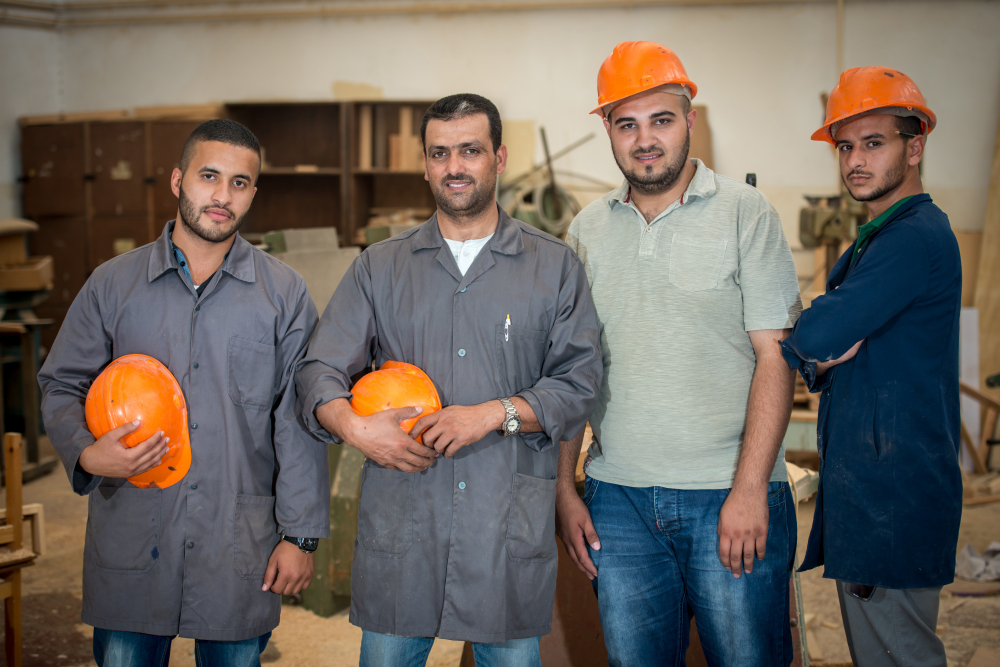
But what exactly qualifies as “unskilled” work for French immigration purposes? Under French labor regulations, unskilled positions typically require less than two years of formal training or specialized experience to perform competently. These are not low-value jobs; rather, they are essential functions that keep the French economy running—harvesting grapes in Bordeaux vineyards, cleaning hotel rooms in Paris, assisting in commercial kitchens, working on construction sites, and caring for elderly patients in nursing homes. However, it is important to understand that France’s immigration system is heavily weighted toward skilled workers. The most streamlined pathways—such as the Talent Passport (Passeport Talent) and the EU Blue Card—are designed for highly qualified professionals with minimum salary thresholds of €42,500 to €55,000 per year . For unskilled workers, the process is more challenging but not impossible, typically involving the standard Salarié work permit with employer sponsorship.
The demand for unskilled foreign labor in France is driven by several factors. France has an aging population and, in certain sectors, a shortage of domestic workers willing to perform physically demanding or seasonal roles. Industries like agriculture (wine harvesting, fruit picking), hospitality (hotel housekeeping, kitchen staff), and construction (general laborers) regularly face recruitment challenges. The French government has responded by maintaining work permit pathways for these roles, though employers must demonstrate that they cannot find a suitable candidate from within the French or EU labor market before hiring from outside the EU . For the right candidate—one who is reliable, physically capable, and willing to work hard—employer-sponsored unskilled positions are available, particularly for seasonal contracts.
READ ALSO 10 Ways to Protect Yourself From Fraud and Save Money (2026 Guide)
In this comprehensive guide, we will explore everything you need to know about securing unskilled sponsored employment in France. We will break down the primary visa pathways—the standard Salarié work permit and the Temporary Worker (VLS-TS) visa for seasonal roles—including their requirements, application processes, and employer obligations. We will highlight specific industries and job types where sponsorship is most common, explain salary expectations (including the critical SMIC threshold), and discuss living costs in various French regions. We will also provide practical advice on how to find legitimate employers offering sponsorship, how to avoid common scams, and what to expect when you arrive in France. Whether you are looking for seasonal agricultural work or a permanent unskilled position, this guide will serve as your roadmap to working in the Hexagon.
Understanding Your Visa Options for Unskilled Work
Unlike skilled professionals who have access to the Talent Passport or EU Blue Card, unskilled workers in France typically rely on two primary visa pathways. Understanding the differences is critical to choosing the right approach.
Option 1: Standard Salarié Work Permit (Long-Term Employment)
The Salarié (Employee) work permit is designed for foreign workers hired on a standard employment contract, either a CDI (permanent contract) or CDD (fixed-term contract) . For unskilled positions, this is the most common pathway, though it requires the employer to navigate a more rigorous approval process than skilled visas.
Key Features of the Salarié Work Permit:
| Feature | Details |
|---|---|
| Visa Type | Long-term stay visa (VLS-TS) leading to residence permit |
| Contract Types | CDI (permanent) or CDD (fixed-term) |
| Initial Validity | 1 year (renewable) |
| Path to Permanent Residency | After 5 years of continuous residence (with A2 French) |
| Family Benefits | Spouse and children can join after 18 months (subject to income requirements) |
Employer Requirements for Sponsorship:
To sponsor an unskilled foreign worker, a French employer must complete several mandatory steps :
-
Post the position on France Travail (formerly Pôle emploi) for at least 3 weeks to prove no suitable French or EU candidate is available
-
Submit a work authorization application (Autorisation de Travail) to the local DIRECCTE (Regional Directorate for Economy, Employment, and Labor)
-
Provide additional documentation verifying the company’s financial situation and the viability of the recruitment plan (new requirement as of 2025)
-
Pay the OFII fee (French Office of Immigration and Integration) – amount varies based on contract duration and salary
Minimum Salary Requirement for Salarié Permit:
For a standard Salarié work permit, the employer must offer a salary at least 1.5 times the French minimum wage (SMIC) . As of 2026, the SMIC is €1,747.20 per month (gross), meaning the minimum monthly salary for sponsorship is €2,620.80 (approximately €31,450 annually) .
Important Note: This minimum salary threshold applies regardless of whether the position is considered “unskilled.” Employers cannot legally sponsor a worker for a position paying only the base SMIC of €1,747.20—the salary must meet the 1.5x SMIC requirement.
Option 2: Temporary Worker (VLS-TS) for Seasonal Employment
For unskilled workers seeking temporary or seasonal positions, the VLS-TS Temporary Worker visa is the primary pathway . This is ideal for agricultural work, tourism/hospitality seasonal staff, and other peak-load positions.
Key Features of the Temporary Worker Visa:
| Feature | Details |
|---|---|
| Visa Type | Long-stay visa (VLS-TS) valid for up to 12 months |
| Best For | Seasonal agricultural work, hospitality, event staffing |
| Duration | Matches contract length (typically 3–9 months) |
| Renewal | Limited; designed for temporary stays |
| Path to Permanent Residency | No direct path (temporary visa only) |
Industries with Highest Seasonal Demand:
| Industry | Example Positions | Typical Season |
|---|---|---|
| Agriculture | Grape harvesters (vendanges), fruit pickers | August–October |
| Hospitality | Hotel housekeeping, kitchen staff, waiters | Summer (June–September) |
| Ski Resorts | Lift operators, hotel staff, kitchen assistants | Winter (December–March) |
| Event Staffing | Setup/teardown crews, concession workers | Varies |
Employer Requirements for Seasonal Sponsorship:
For seasonal workers, employers must provide proof that the employee will have suitable and adequate accommodation during their work period (new requirement as of 2025) . The employer must also complete the standard work authorization process.
What About the Talent Passport? (Not for Unskilled Workers)
The Talent Passport (Passeport Talent) is NOT available for unskilled workers. This visa is reserved for highly skilled professionals, researchers, investors, and innovative company employees, with minimum salary requirements of €42,500 per year (approximately 2x SMIC) . Unskilled applicants should focus exclusively on the Salarié and Temporary Worker pathways.
Critical Requirement: The Labor Market Test
For unskilled positions (which are not on France’s shortage occupation list), employers must conduct a labor market test before they can hire a non-EU worker . This involves:
-
Advertising the position on France Travail (the national employment agency) for at least 3 weeks
-
Demonstrating that no suitable candidate was found among French citizens or EU nationals
-
Documenting all recruitment efforts for submission with the work authorization application
Important: If the position is on France’s shortage occupation list (Métiers en tension), the labor market test may be simplified or waived. However, most pure unskilled positions (general laborer, cleaner, harvester) are not on this list unless they require specific skills.
In-Demand Unskilled Jobs with Sponsorship Potential
While sponsorship for unskilled positions is more difficult to secure than for skilled roles, certain industries and specific niches offer genuine opportunities.
1. Agricultural Work (Seasonal)
Agriculture is the largest employer of seasonal foreign workers in France. The wine harvest (vendanges) alone employs tens of thousands of temporary workers each year.
In-Demand Positions:
-
Grape harvesters (vendangeurs)
-
Fruit and vegetable pickers
-
Greenhouse workers
-
Sorters and packers
Sponsorship Likelihood: High for seasonal contracts through established agricultural employers and labor recruiters. Major wine regions (Bordeaux, Burgundy, Champagne) have well-established systems for hiring foreign harvest workers.
Typical Salary: Slightly above SMIC (€1,800–€2,200/month gross), often with accommodation provided.
Example Regions: Bordeaux (wine harvest), Provence (lavender, fruits), Brittany (vegetables).
2. Hospitality and Housekeeping
France’s massive tourism industry creates constant demand for housekeeping and cleaning staff, particularly in hotels and resorts.
In-Demand Positions:
-
Hotel housekeepers (femmes de chambre)
-
Kitchen assistants (plongeurs)
-
Laundry workers
-
Cleaning staff
Sponsorship Likelihood: Moderate. Large hotel chains and resort operators are more likely to sponsor than small independent hotels. Seasonal positions in high-tourism areas (French Riviera, Alps ski resorts) offer better sponsorship prospects.
Typical Salary: SMIC to €2,000/month gross, often with accommodation included in seasonal contracts.
Example Employers: AccorHotels (Ibis, Novotel, Sofitel), Pierre & Vacances, Club Med, and large resort operators.
READ ALSO Unskilled Jobs in the US for Immigrants with Visa Sponsorship 2026
3. Construction and General Labor
France’s construction sector faces ongoing labor shortages, particularly for general laborers willing to perform physically demanding work.
In-Demand Positions:
-
General construction laborers (manœuvres)
-
Demolition workers
-
Site cleaners
-
Material handlers
Sponsorship Likelihood: Moderate to low. Construction sponsorship is more common for skilled trades (electricians, plumbers) than pure unskilled labor. However, large infrastructure projects occasionally sponsor general laborers.
Typical Salary: €2,000–€2,500/month gross for full-time positions.
Challenges: Construction work often requires basic safety certifications (CACES, SST) that may be difficult to obtain from abroad.
4. Food Processing and Manufacturing
Food processing plants and manufacturing facilities in rural areas often struggle to find enough workers, creating sponsorship opportunities.
In-Demand Positions:
-
Production line workers
-
Packers and sorters
-
Quality control assistants (entry-level)
-
Cleaning staff (industrial)
Sponsorship Likelihood: Moderate. Large agribusiness companies (Danone, Lactalis, Bonduelle) have more resources to sponsor foreign workers than smaller operations.
Typical Salary: SMIC to €2,200/month gross.
5. Caregiving and Elderly Support (Limited)
France’s aging population has created demand for caregivers (aides-soignants) and home health aides. While these positions often require basic certification, some entry-level caregiving roles may be accessible to unskilled workers.
In-Demand Positions:
-
Home health aides (auxiliaires de vie)
-
Nursing home assistants
-
Childcare assistants (nounous)
Sponsorship Likelihood: Low for completely unskilled workers, as French regulations often require specific certifications (DEAES, CAP). However, some home care agencies may sponsor workers with relevant experience but no formal qualifications.
Language Requirement: French proficiency at B1 level or higher is typically required for caregiving roles.
Summary Table: Unskilled Sponsorship Opportunities
| Industry | Position Types | Sponsorship Likelihood | Typical Salary (Monthly Gross) |
|---|---|---|---|
| Agriculture | Harvesters, pickers, sorters | High (seasonal) | €1,800–€2,200 |
| Hospitality | Housekeeping, kitchen assistants | Moderate | €1,800–€2,000 |
| Construction | General laborers | Moderate–Low | €2,000–€2,500 |
| Food Processing | Production workers, packers | Moderate | €1,800–€2,200 |
| Caregiving | Home health aides | Low | €1,900–€2,300 |
Salary Requirements: The SMIC Threshold
The single most important financial requirement for any sponsored work permit in France is the minimum salary threshold. Understanding this is critical for both workers and employers.
Current SMIC (2026)
As of 2026, the French minimum wage (SMIC) is €1,747.20 per month gross (approximately €20,966 annually) .
Sponsorship Minimum: 1.5x SMIC
For a standard Salarié work permit (the pathway most relevant to unskilled workers), the employer must offer a salary at least 1.5 times the SMIC .
Calculation:
-
1.5 × €1,747.20 = €2,620.80 per month gross
-
Annual equivalent: €31,449.60
What This Means for Unskilled Workers:
The 1.5x SMIC requirement means that unskilled positions paying only the base minimum wage do NOT qualify for sponsorship. The employer must be willing to pay above the legal minimum—often significantly above—to sponsor a foreign worker. This is one of the biggest barriers to unskilled sponsorship in France.
Comparison: Visa Salary Thresholds
| Visa Type | Minimum Annual Salary | Monthly Equivalent |
|---|---|---|
| Talent Passport (Qualified Employee) | €42,500 | ~€3,542 |
| EU Blue Card | €55,000 | ~€4,583 |
| Standard Salarié (including unskilled) | ~€31,450 | €2,620.80 |
| SMIC (minimum wage, no sponsorship) | €20,966 | €1,747.20 |
Why Employers Might Pay Above SMIC for Unskilled Workers
Given that employers could hire a French or EU worker at SMIC (€1,747/month), why would they pay €2,620/month to sponsor a non-EU worker? Several factors drive this:
-
Genuine labor shortages – In some regions and industries, no local workers are available at any price
-
Reliability and work ethic – Some employers find foreign workers more reliable than domestic workers
-
Seasonal peaks – During harvest or tourist seasons, the cost of not having enough workers exceeds the higher wage
-
Long-term investment – Employers may pay above market to retain reliable workers across multiple seasons
Employer Obligations and Costs
Understanding what employers must do and pay helps you recognize legitimate sponsorship opportunities.
Employer Application Process
French employers sponsoring a foreign worker must complete these steps :
| Step | Action | Timeline |
|---|---|---|
| 1 | Post job on France Travail for 3+ weeks | 21 days |
| 2 | Submit work authorization application to DIRECCTE | 2–4 weeks processing |
| 3 | Receive approval (valid for 3 months) | Immediate upon approval |
| 4 | Provide approval to employee for visa application | N/A |
Employer Costs
| Cost Item | Amount | Paid By |
|---|---|---|
| OFII fee (contribution) | Varies (€300–€1,000+) | Employer |
| Work authorization application fee | €0 (no direct fee) | Employer |
| France Travail job posting | Free | Employer |
Important: Legitimate employers pay these costs, not the worker. If an employer asks you to pay for your own work permit or OFII fee, this is a red flag.
Documentation Requirements (2026 Updates)
As of 2025, employers must provide additional documentation to verify :
-
The company’s financial situation (proof of solvency)
-
The viability of the recruitment plan (justification for hiring foreign rather than local)
-
For seasonal work: proof of suitable accommodation for the worker during the contract period
How to Find Legitimate Sponsorship Opportunities
Finding unskilled sponsorship requires targeted effort and vigilance against scams.
1. Target Seasonal Agricultural Programs
Established agricultural recruiters and large farming cooperatives are the most reliable sources of unskilled sponsorship. Focus on:
-
Wine harvest (vendanges): Major wine regions have websites listing harvest jobs
-
Fruit and vegetable harvesting: Regions like Provence-Alpes-Côte d’Azur
-
Large agricultural cooperatives: These have experience with foreign worker sponsorship
2. Contact Large Hospitality Chains
Small hotels rarely sponsor foreign workers, but large chains have dedicated HR teams that manage international recruitment:
-
AccorHotels (Ibis, Novotel, Sofitel)
-
Pierre & Vacances
-
Club Med
-
Center Parcs
3. Use France Travail (Government Job Board)
The official French employment agency, France Travail (formerly Pôle emploi), lists positions that employers have certified as genuinely available. While the site is primarily in French, it is the most reliable source for verified job postings.
4. Work with Reputable Recruitment Agencies
Some agencies specialize in placing foreign workers in French agricultural and hospitality roles. Always verify agency legitimacy before paying any fees.
5. Network Through Community Connections
If you have family or friends already working in France in sponsored roles, ask them about openings at their employers. Many opportunities spread through word-of-mouth.
6. Be Wary of “Too Good to Be True” Offers
Legitimate unskilled sponsorship offers are rare and typically involve:
-
Salaries around €2,600–€3,000 per month (1.5x SMIC minimum)
-
Transparent application processes through official channels
-
No requests for upfront payment for visas or job placement
Red Flags and Scams to Avoid
Unskilled workers seeking French sponsorship are frequent targets of fraud. Protect yourself.
Common Scams Targeting Unskilled Workers
🚩 “Guaranteed” visa approval – No one can guarantee French visa approval.
🚩 Requests for upfront payment – Legitimate employers do not ask workers to pay for work permits or OFII fees.
🚩 Fake job offers – Scammers create fake company websites and job postings. Always verify the employer’s SIRET number (French business registration).
🚩 “Too good to be true” promises – Unskilled positions in France do not pay €4,000+/month. Realistic salaries are €2,600–€3,000/month.
🚩 Unsolicited offers via WhatsApp or Telegram – Legitimate recruiters use professional channels, not encrypted messaging apps.
How to Verify Legitimate Sponsorship
✅ Check the employer’s SIRET number – All French businesses have a SIRET number. Verify it on the Infogreffe register.
✅ Use official government channels – France Travail (government job board) is the most reliable source.
✅ Never send money – Legitimate employers pay for work permits and OFII fees.
✅ Remember the salary threshold – Any offer below €2,620/month cannot be legitimate for sponsorship.
Life in France as an Unskilled Worker
Estimated Monthly Living Costs
| Expense Category | Paris | Regional France (Lyon, Bordeaux) | Rural France |
|---|---|---|---|
| Rent (1-bedroom) | €1,000–€1,600 | €700–€1,100 | €500–€800 |
| Utilities & Internet | €150–€250 | €130–€200 | €120–€180 |
| Groceries | €300–€450 | €280–€400 | €250–€380 |
| Transport | €75–€150 | €60–€120 | €50–€100 |
| Health Insurance (mutuelle) | €30–€60 | €30–€60 | €30–€60 |
| Total Monthly | €1,555–€2,510 | €1,200–€1,880 | €950–€1,520 |
After-Tax Salary Estimate
A sponsored unskilled worker earning €2,620/month gross will take home approximately €2,000–€2,100 after taxes and social contributions (depending on marital status and dependents).
In rural France, this is sufficient for a modest lifestyle with savings potential.
In Paris: This is tight; many sponsored workers in Paris share accommodation or live in the suburbs.
Path to Permanent Residency
After 5 years of continuous legal residence in France on a Salarié work permit, you may apply for a 10-year residence card (carte de résident). Requirements include:
-
Continuous residence (at least 183 days per year in France)
-
French language proficiency at A2 level (basic conversational)
-
No criminal record
-
Integration into French society (signing the Republican Integration Contract)
Path to Citizenship
After 5 years as a permanent resident (10 years total in France), you may apply for French citizenship. Citizenship requires French proficiency at B1 level (intermediate).
Frequently Asked Questions (FAQ)
Q: Can I get a work visa for an unskilled job in France?
A: Yes, but it is difficult. The employer must pay at least 1.5x SMIC (€2,620/month) and prove no French/EU candidate was available.
Q: What is the minimum salary for sponsorship in 2026?
A: For a standard Salarié work permit, the minimum is €2,620.80 per month gross (1.5x the SMIC of €1,747.20).
Q: Can I apply for a work visa without a job offer?
A: No. A French employer must sponsor you and obtain work authorization before you can apply for the visa.
Q: Can my family come with me on a work visa?
A: For Salarié work permits, family reunification is possible after 18 months, provided you meet income requirements.
Q: Do I need to speak French for an unskilled job?
A: Basic French (A1–A2) is very helpful for daily life, though not strictly required for agricultural or some cleaning jobs. However, for permanent residency after 5 years, you will need A2 French.
Q: Are there age limits for unskilled work visas?
A: No official age limit, but you must be capable of performing the physical work required.
Q: How long does the visa process take?
A: From job offer to visa issuance, typically 4–6 months.
Conclusion
Are you ready to work hard and build a new life in France? If so, pursuing unskilled jobs in France for immigrants with visa sponsorship is challenging but possible—particularly in seasonal agriculture and hospitality. Unlike skilled professionals who have access to streamlined Talent Passport pathways, unskilled workers face a higher bar: employers must navigate a rigorous work authorization process, prove that no French or EU candidate was available, and pay a minimum salary of €2,620 per month (1.5x the SMIC). However, in sectors facing genuine labor shortages—wine harvesting, hotel housekeeping, food processing—employers are sometimes willing to meet these requirements. France needs workers, and for the right candidate who is reliable, physically capable, and persistent, sponsored unskilled employment is a realistic goal.
However, success requires more than just desire—it requires strategy, patience, and vigilance against scams. As we have outlined in this guide, the primary pathway for unskilled workers is the standard Salarié work permit for permanent contracts or the Temporary Worker (VLS-TS) visa for seasonal positions. Neither pathway is fast or simple. Employers must post positions on France Travail for three weeks, submit work authorization applications to DIRECCTE, and provide additional documentation verifying their financial situation and recruitment plans. For seasonal workers, employers must also prove suitable accommodation is available. The entire process typically takes 4–6 months from job offer to visa issuance. Workers should target industries with demonstrated sponsorship history—agricultural harvests, large hotel chains, and food processing plants—and should be prepared to earn between €2,600 and €3,000 per month, which is sufficient for a modest lifestyle outside of central Paris.
To maximize your chances of success, we recommend taking action on four fronts immediately. First, target seasonal agricultural work, as this sector has the most established systems for hiring foreign workers. Research wine harvest (vendanges) opportunities in Bordeaux, Burgundy, and Champagne, which employ thousands of seasonal workers each year. Second, contact large hospitality chains directly through their HR portals, rather than relying on general job boards. Companies like AccorHotels and Club Med have dedicated international recruitment processes. Third, verify every employer’s legitimacy by checking their SIRET number on the Infogreffe register and never sending money for visa processing—legitimate employers pay the OFII fees and work permit costs. Fourth, be realistic about the salary threshold: any offer below €2,620 per month cannot result in a valid work permit, regardless of what the employer claims.
READ ALSO 8 Best-Selling Items on Facebook Marketplace in 2026 (And How to Sell Them Fast)
In conclusion, France offers genuine opportunities for unskilled workers, but the path requires more effort and patience than skilled immigration routes. The French government has made the process more transparent, with digital applications through the ANEF system and clear documentation requirements. For the determined worker who finds the right employer in the right industry—agriculture, hospitality, or food processing—sponsored employment is achievable. The reward is legal work in one of Europe’s most beautiful and culturally rich countries, with pathways to permanent residency and citizenship over time. Take the first step today: research seasonal harvest opportunities, prepare a simple French CV, and start contacting employers directly. Your French journey may be closer than you think