
Nigerian Tech Founders: Success Stories of Africa’s Digital Pioneers (2026 Update)
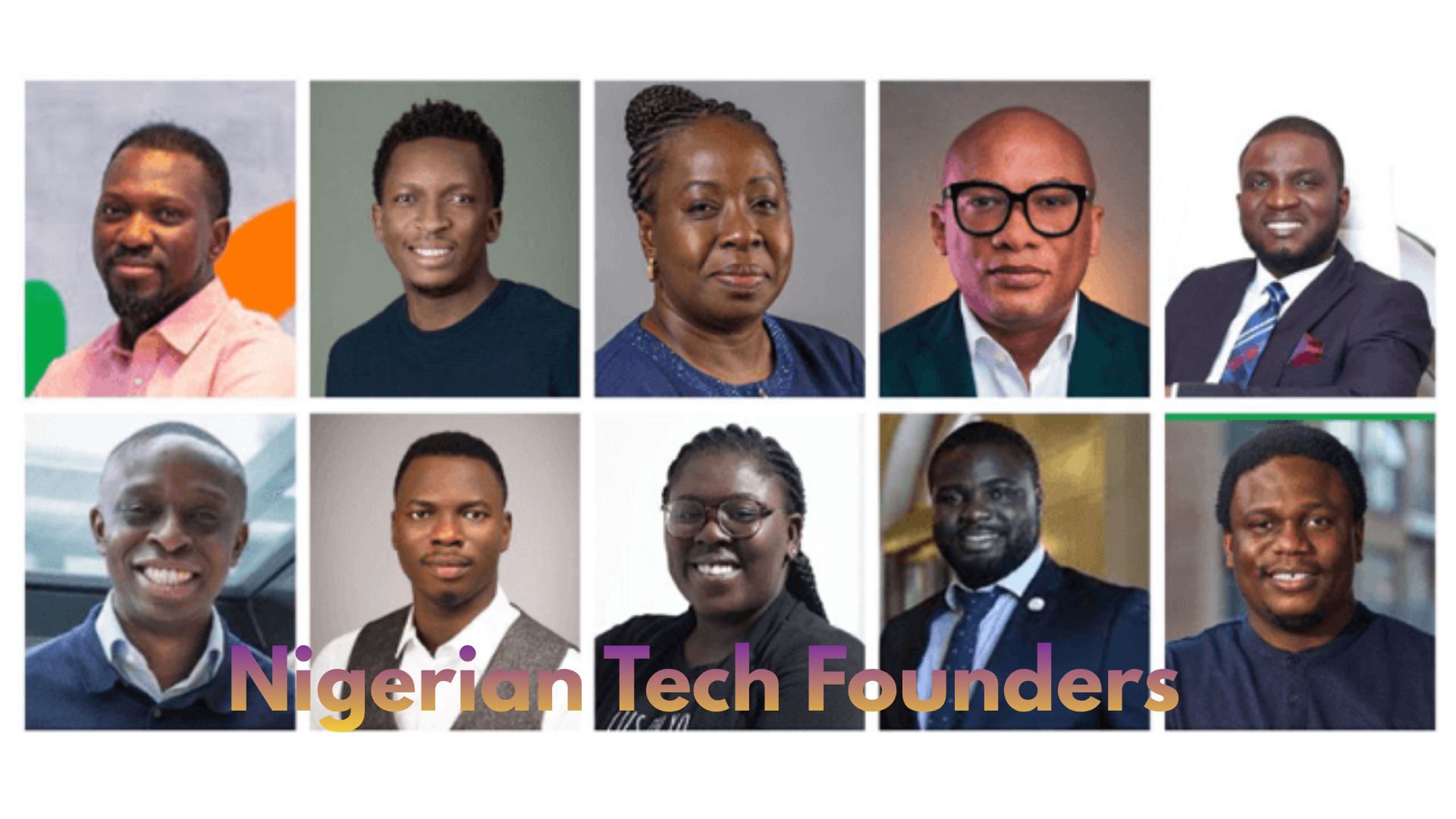 Nigeria’s tech ecosystem has undergone a remarkable transformation over the past two decades. What was once dismissed as a peripheral player in global innovation now commands millions of dollars in venture capital, produces unicorns at a rapid pace, and exports ideas and founders to the world. Behind the billion-dollar valuations and headline-grabbing acquisitions are stories of persistence, setbacks, reinvention, and an unwavering vision to solve real problems with local solutions.
From the bustling markets of Lagos to global boardrooms in Atlanta and London, Nigerian tech founders have proven that innovation from Africa can compete on the world stage. In this comprehensive feature, we explore the journeys of these digital pioneers—from Tope Awotona, who turned a frustrating scheduling problem into a $3 billion software company, to Nnamdi Ezeigbo, who built Nigeria’s leading smartphone retail empire from a single store. We’ll also highlight emerging founders like Saint Webb Ofoh, who is quietly building infrastructure platforms without venture capital, and Abayomi Falansa, who leveraged Twitter to land global AI deals.
These entrepreneurs share common threads: resilience in the face of failure, a deep understanding of local challenges, and the audacity to build world-class solutions from Nigeria. Their stories are not just about personal wealth—they reflect ecosystems of jobs, innovation, and global relevance that are reshaping Africa’s economic narrative.
READ ALSO Jake Paul Biography, Age, Net Worth, Family, Achievement
Quick Overview: Nigeria’s Most Influential Tech Founders
| Founder | Company | Sector | Valuation/Status | Key Achievement |
|---|---|---|---|---|
| Tope Awotona | Calendly | Productivity Software | $3 billion | Net worth $1.4 billion (2025) |
| Nnamdi Ezeigbo | SLOT Systems | Mobile Retail | Nationwide chain | Pioneered Nigerian smartphone retail |
| Olugbenga Agboola | Flutterwave | Fintech | $3 billion | Africa’s most valuable startup |
| Mitchell Elegbe | Interswitch | Fintech | $1.3 billion+ | Nigeria’s first unicorn |
| Shola Akinlade & Ezra Olubi | Paystack | Fintech | $200M acquisition | First major Silicon Valley acquisition |
| Tosin Eniolorunda | Moniepoint | Fintech | $1 billion+ | Serving 2M+ SMEs |
| Iyinoluwa Aboyeji | Andela, Flutterwave | Edtech, Fintech | Multiple unicorns | Ecosystem builder |
| Sim Shagaya | Konga, uLesson | E-commerce, Edtech | $100–150M | Serial entrepreneur |
| Seun Dania | Alpha-Geek, Tradefada | Blockchain, IT Solutions | Multiple ventures | Entrepreneur of the Year 2025 |
| Saint Webb Ofoh | PAPAPA Resources | Logistics, Construction Tech | ₦900k MRR (bootstrapped) | Revenue-first growth |
The Titans: Nigerian Tech Founders Making Global Impact
Tope Awotona: From Tragedy to Billion-Dollar Success
Tope Awotona’s journey is one of the most inspiring stories in global tech entrepreneurship. Born in Lagos, Nigeria, on May 4, 1981, Awotona’s early life was shaped by both ambition and tragedy. His father was a microbiologist and entrepreneur, while his mother worked as Chief Pharmacist for the Central Bank of Nigeria. When Awotona was just 12 years old, his father was killed in a carjacking—a traumatic event that would later become a major motivation for him to pursue his father’s entrepreneurial legacy.
Following this tragedy, Awotona’s mother decided to relocate the family to the United States, settling in the Atlanta, Georgia area . Though Awotona had graduated from high school two years early and received a scholarship to a US college at 15, his mother insisted he complete two years at Wheeler High School to assimilate and learn American culture. “It was super frustrating. I felt like I was wasting time because I had my plan in place,” he later recalled . In retrospect, those two years proved valuable, helping him adapt to his new environment.
Awotona attended the University of Georgia, initially majoring in Computer Science before switching to Business Management Information Systems . After graduating in 2002, he held corporate sales roles at companies like IBM, Perceptive Software, Vertafore, and EMC . But the entrepreneurial itch never left him.
Before finding success, Awotona launched three failed startups—a dating site, an online projector store, and a BBQ grill store . These ventures taught him invaluable lessons about focusing on solving meaningful problems rather than chasing profits.
The breakthrough came in late 2012. Frustrated by the inefficiency of scheduling meetings, Awotona decided to create a solution. He poured his life savings into the project, maxed out credit cards, and launched Calendly from Atlanta Tech Village in September 2013 . For eight years, he bootstrapped the company, focusing on perfecting the product rather than chasing investors.
His patience paid off. Today, Calendly is valued at $3 billion with over 10 million users . In 2025, Forbes estimated Awotona’s net worth at $1.4 billion, making him one of only two Black tech billionaires in the world . He has been recognized on the ForbesBLK 50 list as one of the most exceptional Black individuals driving progress in business .
Key Lessons from Tope Awotona:
-
Perseverance matters: Three failed startups didn’t stop him
-
Product-first approach: Focus on solving genuine problems, not chasing profits
-
Delayed gratification: Eight years of bootstrapping before major investment
Nnamdi Ezeigbo: Nigeria’s Smartphone Revolution
Nnamdi Ezeigbo’s story began in the bustling markets of Lagos in the late 1990s. A computer engineering graduate with a sharp eye for opportunity, Ezeigbo spotted a critical gap in Nigeria’s mobile phone market: a lack of affordable, high-quality devices backed by trustworthy after-sales support .
In 1998, he launched SLOT Systems Limited from a small retail shop. At a time when the Nigerian mobile market was rife with counterfeit products, Ezeigbo built his reputation on trust, technical expertise, and genuine after-sales service . His commitment to quality and affordability made modern mobile technology accessible to Nigeria’s expanding middle class.
What started as a single store has grown into a nationwide network of outlets, delivering smartphones, accessories, and professional repair services to millions of Nigerians. In a bold move, Ezeigbo also ventured into smartphone manufacturing, launching SLOT’s own brand tailored specifically to the Nigerian market .
Today, SLOT Systems employs thousands of Nigerians and remains one of the country’s most trusted names in mobile technology. Ezeigbo’s rise has become a blueprint for young African entrepreneurs, proving that with determination, adaptability, and innovation, it’s possible to turn a local dream into a continental success story .
Key Lessons from Nnamdi Ezeigbo:
-
Build trust: In markets with counterfeit products, authenticity becomes a competitive advantage
-
Think local: Creating products tailored to Nigerian needs sets you apart
-
Scale patiently: From one store to nationwide—growth takes time
The Unicorns: Founders Who Built Africa’s Billion-Dollar Startups
Mitchell Elegbe: Nigeria’s First Unicorn
Mitchell Elegbe founded Interswitch in 2002, long before the Nigerian tech ecosystem had a name. At the time, Nigeria’s payment landscape was fragmented, cash-driven, and ripe for disruption. Elegbe saw an opportunity to build digital payment infrastructure that could serve the country’s unbanked and underbanked population .
For years, Interswitch grew steadily, processing payments and building relationships with banks, merchants, and government agencies. In 2019, Visa acquired a significant stake in the company, valuing Interswitch at $1 billion and making it Nigeria’s first unicorn . Today, analysts estimate Interswitch’s worth above $1.3 billion.
Elegbe’s philosophy reflects his pioneering spirit: “Compelling business opportunities exist only where there are challenges”.
READ ALSO Luke Bryan Biography, Age, Net Worth, Family, Education
Olugbenga “GB” Agboola: Flutterwave’s Global Vision
Olugbenga Agboola, known as GB, brings a unique perspective to Nigerian fintech. Before co-founding Flutterwave in 2016, he worked as an engineer at PayPal, GTBank, and Standard Bank—experiences that gave him deep insights into both global payment systems and local African banking challenges .
Flutterwave was built to simplify payments for African businesses, enabling them to accept payments from customers anywhere in the world. The company’s vision is simple: “Simplify payments for endless possibilities” .
Today, Flutterwave has raised over $470 million and reached a valuation of $3 billion in 2022, making it Africa’s most valuable startup . Agboola’s stake in the company is estimated to be worth tens of millions of dollars.
Shola Akinlade & Ezra Olubi: Paystack’s Historic Exit
When Shola Akinlade and Ezra Olubi founded Paystack in 2015, they set out to solve a simple but critical problem: helping Nigerian merchants accept online payments easily and securely. The company grew rapidly, attracting users across Nigeria and beyond.
In 2020, American payments giant Stripe acquired Paystack for $200 million, marking the first major Silicon Valley acquisition of a Nigerian startup . The deal made both founders multimillionaires and sent a powerful signal to global investors that Nigerian tech companies could build world-class products worthy of international attention.
Tosin Eniolorunda: Moniepoint’s SME Revolution
Tosin Eniolorunda began his career as a software engineer at Interswitch before founding TeamApt in 2015. The company, which rebranded to Moniepoint in 2023, was built to power small businesses with tools to manage payments, access credit, and grow.
Moniepoint now serves over 2 million small and medium enterprises (SMEs) across Nigeria . The company is valued above $1 billion, making Eniolorunda one of the youngest Nigerian fintech millionaires.
“We want to power every small business in Africa with the tools to thrive,” he has said.
Iyinoluwa Aboyeji: The Ecosystem Builder
Iyinoluwa Aboyeji is unique among Nigerian tech founders—he has co-founded two unicorns. First, he co-founded Andela in 2014, a company that trains and connects African software developers with global tech companies. Andela reached a valuation of $1.5 billion in 2021 .
In 2016, he co-founded Flutterwave, which later became Africa’s most valuable startup at $3 billion. Today, Aboyeji is working on his newest venture, Itana, which has raised a $2 million pre-seed to build what he describes as a productive community for young Africans .
“We’re not just trying to get together a bunch of opulent, rich people into a space… what we’re trying to do is pull together a productive young population,” he explains .
Emerging Voices: A New Generation of Nigerian Tech Founders
Saint Webb Ofoh: Building Infrastructure Without Venture Capital
Saint Webb Ofoh represents a new class of African founders—young, operationally experienced, and focused on revenue before valuation . At just 25, the Generation-Z entrepreneur is quietly building PAPAPA Resources Limited, a logistics, towing, GPS tracking, and construction-commerce technology company.
Unlike many Nigerian startups that chase venture capital headlines, Ofoh launched PAPAPA in late 2025 with a contrarian approach: build real infrastructure, generate revenue early, and grow without external funding.
READ ALSO Top 20 Youngest Billionaires in the World (2026)
In just three months, the fully bootstrapped company achieved ₦900,000 in Monthly Recurring Revenue (MRR) . It has onboarded nearly 50 verified construction material vendors across Ogun State, formed partnerships with the National Towing Vehicle Owners Association (NTVOA) and the Truck Owners Association of Nigeria (TOAN), and deployed GPS tracking solutions for multiple vehicle types.
Ofoh’s professional journey began in product management and operations, giving him a cross-functional understanding of how technology must integrate with people and processes. Between 2020 and 2022, he worked as an Assistant Product Manager at YagaPay, a fintech company, and later as an Operational Specialist at Heyfood, where he gained ground-level exposure to logistics coordination and service delivery.
He holds a Bachelor of Arts in English Language and Literature from the National Open University of Nigeria (NOUN), completed between 2018 and 2022—a reminder that non-technical backgrounds can still lead successful tech ventures.
“Nigeria doesn’t need more ideas—it needs systems that work in real environments,” Ofoh has said when discussing PAPAPA’s mission.
Abayomi Falansa: From Twitter DMs to Global AI Deals
Abayomi Falansa’s journey from a physics education graduate to the CEO and co-founder of Lingtec.AI illustrates the borderless nature of today’s digital economy.
Before co-founding Lingtec.AI, Falansa cut his teeth in product management, beginning as an intern at a news app and rising to product operations manager roles at companies like Phoenix Browser and Koo app. This experience—particularly in localizing foreign apps for Nigerian users—proved crucial to his later success.
One of his major career breaks came serendipitously via a Twitter exchange with his mentor, which led to a remote job at VeerOne AI (formerly BNN) without a formal interview. There, working on a globally distributed team as the only Black person on the tech team, he gained invaluable insights into the global AI landscape.
Observing the stark underrepresentation of African and Asian languages in AI datasets, Falansa saw an opportunity to address a critical gap. That insight sparked Lingtec.AI, a company working at the intersection of African linguistics and AI innovation. Early clients include global giants like Uber and TikTok—validation of the company’s approach.
Financially, Lingtec.AI is already turning heads. Its largest single deal to date was worth $25,000, with a healthy $15,000 profit margin. Falansa’s personal journey reflects this growth: his salary rose from ₦72,000 in 2019 to $2,000 within four years.
For students and professionals from non-tech backgrounds interested in AI, Falansa offers encouragement: today’s digital economy is borderless and increasingly merit-based. He sees language-related roles in AI as an emerging goldmine, especially for those fluent in African languages.
Seun Dania: Blockchain and Beyond
When Seun Dania walked up to the podium at the 2025 Africa’s Beacon of ICT (ABoICT) Merit and Leadership Awards, he claimed two significant honors: Entrepreneur of the Year and a spot among the Top 50 Most Valuable Personalities in Nigeria’s Digital Economy. His company, Alpha-Geek Technologies, also clinched the Excellence Award for Innovative IT Solutions Provider.
Dania’s journey began with a fascination for computers. He studied Electronics and Computer Engineering at Lagos State University (LASU), where he honed the problem-solving mindset that would later define his approach to entrepreneurship. After university, he worked as an IT Manager in the oil and gas industry before feeling the pull of something more.
His introduction to early digital currencies like e-gold and Liberty Reserve—both of which collapsed due to centralized vulnerabilities—led him to Bitcoin. When Bitcoin entered the scene, Dania saw not just a cryptocurrency, but a philosophy: decentralization, transparency, and inclusion.
This led him to found Tradefada, a cryptocurrency exchange platform designed specifically for Nigerians. Offering access to major digital assets like Bitcoin and Ethereum, Tradefada made it easier for everyday people and businesses to participate in the digital financial revolution.
Beyond Tradefada, Dania has served as Director of the Africa Stablecoin Consortium, the creators of Nigeria’s first regulatory-compliant stablecoin cNGN. His portfolio extends to agriculture, entertainment, oil and gas, and corporate social responsibility.
Dania’s commitment to the ecosystem extends to angel investing—including a 2023 investment in Patricia Technologies, a leading African crypto platform—demonstrating his dedication to supporting the next generation of innovators.
Damilare Ajiboye: Building Global Platforms from Nigeria
Damilare Ajiboye, founder and CEO of Ocean Trends Digital Limited, represents the rising generation of developers who are not only writing code but rewriting Africa’s tech narrative .
Originally launched in 2017 as a modest startup in Ilorin, Kwara State, with a handful of engineers, Ocean Trends now employs over 50 staff across multiple locations, delivering digital solutions used in Africa, North America, and Europe.
The company has evolved into a multi-product tech ecosystem, building and managing platforms across multiple sectors. Its notable products include:
-
Bimzukash: A loan management system tailored to Africa’s credit landscape
-
Easybill: A utility and telecom payment platform
-
AlheriCare: A care management tool designed for the U.S. adult care sector
-
Immibuddy: An AI-based platform for international students
-
EarnIt NG: A social commerce platform targeting Nigeria’s gig economy
Ajiboye’s background uniquely combines accounting and computer science—he holds degrees and professional certifications from the National Open University of Nigeria, the University of Wolverhampton in the UK, and is a chartered accountant with ICAN.
His efforts have earned recognition: CEO of the Year at the All Way to Tech Awards in 2020 and featured in the African Under 40 CEOs Awards hosted in South Africa.
“What began in Ilorin, grew in Lagos and is now supporting clients abroad,” Ajiboye said. “It was about execution—proving that tech from Africa can scale and compete globally”.
Founders Driving Financial Inclusion
Tayo Oviosu: Digitizing Cash
Tayo Oviosu, a former Visa executive, launched Paga in 2009 with a mission to digitize cash in Nigeria. His observation was simple but profound: “Cash is still king in Nigeria, and our mission is to digitize cash” .
Paga has since processed over $20 billion in transactions, raised more than $35 million, and achieved a valuation of $400–500 million. The company remains one of Nigeria’s most trusted payment platforms.
Odunayo Eweniyi: Building Savings Culture
Odunayo Eweniyi co-founded Piggybank.ng (now PiggyVest) in 2016 to help Nigerians save and invest money easily. The platform now has over 5 million users and has facilitated ₦2 trillion ($2.5 billion+) in cumulative savings . PiggyVest is valued at approximately $150–200 million.
Eweniyi’s philosophy reflects her no-nonsense approach: “Aim very high. Work very hard. Care very deeply” .
The Dozie Brothers: Carbon’s Pan-African Vision
Chijioke and Ngozi Dozie founded Paylater in 2016, later rebranded as Carbon. Their mission: “Make access to credit as easy as buying airtime” . The company has raised over $15 million, achieved a valuation above $100 million, and is evolving into a pan-African digital bank.
Wemimo Abbey: Esusu’s American Impact
At just 32, Wemimo Abbey’s inclusion on the ForbesBLK 50 list demonstrates that age is no barrier to excellence. Abbey co-founded Esusu, a fintech platform that empowers renters and promotes financial inclusion in the United States. With services impacting over 1.8 million Americans, Esusu addresses systemic financial inequalities through innovative solutions.
Innovators in Other Sectors
Sim Shagaya: From E-commerce to Edtech
Sim Shagaya is one of Nigeria’s most respected serial entrepreneurs. He founded Konga, one of Nigeria’s first major e-commerce platforms, in 2012. After selling the company, he turned his attention to education technology, launching uLesson in 2019.
uLesson provides affordable, high-quality educational content to students across Africa. The company has raised over $25 million and is valued at approximately $100–150 million.
“Africa cannot build fast enough physical universities, so technology must deliver knowledge at scale,” Shagaya explains.
Etop Ikpe: Revolutionizing Auto Commerce
Etop Ikpe founded Cars45 in 2016 to simplify the process of buying and selling used cars in Nigeria. After exiting the company, he launched Autochek, which has raised over $20 million and is valued at $70–100 million.
“Buying or selling a car in Africa should not be stressful—we are changing that,” he says.
Femi Kuti: Healthtech Pioneer
Dr. Femi Kuti co-founded Reliance Health in 2015, combining his medical background with technology to make healthcare affordable and accessible. The company raised a $40 million Series B in 2022 and is valued at $120–150 million.
“Healthcare should be affordable and accessible to everyone, regardless of income,” Kuti says.
Onyeka Akumah: Agritech and Mobility
Onyeka Akumah founded Farmcrowdy in 2016 to connect farmers with finance and market access. He later launched Treepz, a mobility platform, in 2019. Both ventures reflect his commitment to solving practical problems in agriculture and transportation.
“We wanted to connect millions of farmers to finance and market access—and that’s how Farmcrowdy began,” he recalls.
Common Themes in Nigerian Tech Success Stories
1. Resilience in the Face of Failure
Tope Awotona’s three failed startups before Calendly. Nnamdi Ezeigbo starting from a single store in Lagos markets. These stories share a common thread: success rarely comes on the first attempt.
2. Solving Local Problems
Whether it’s Mitchell Elegbe building payment infrastructure for Nigeria’s unbanked or Nnamdi Ezeigbo addressing the lack of trustworthy mobile retailers, successful founders focus on real-world challenges they understand deeply.
READ ALSO Travis Scott Biography: Early Life, Career, Achievements and Legacy
3. Building Trust and Authenticity
In markets where counterfeit products and unreliable services are common, trust becomes a competitive advantage. SLOT Systems built its reputation on genuine after-sales support . Paystack succeeded by making payments simple and reliable .
4. Thinking Beyond Nigeria
While most of these founders started by solving Nigerian problems, their ambitions quickly expanded. Flutterwave now operates across Africa. Calendly serves users globally. Ocean Trends Digital counts international clients in North America and Europe.
5. Diverse Educational Backgrounds
Not every tech founder studied computer science. Saint Webb Ofoh holds an English degree. Damilare Ajiboye combines accounting with computer science. Seun Dania studied engineering but built his career across multiple sectors. The digital economy is increasingly merit-based and borderless.
6. The Power of Community
Many founders credit their success to networks built on platforms like Twitter and mentorship from established entrepreneurs. Iyinoluwa Aboyeji, for example, has helped build the ecosystem not just through his own companies but by inspiring and supporting others.
The Future of Nigerian Tech
As Nigeria’s tech ecosystem continues to mature, several trends are emerging:
Revenue-First, Not Hype-First
Founders like Saint Webb Ofoh represent a new wave of entrepreneurs who prioritize revenue before valuation and partnerships before publicity. In a market increasingly wary of hype-driven startups, this approach builds durability and scale.
African Languages in AI
Abayomi Falansa’s Lingtec.AI highlights a critical opportunity: the underrepresentation of African languages in AI datasets . As AI becomes more global, founders who address this gap will find growing demand.
Infrastructure Technology
While fintech has dominated Nigeria’s tech narrative, founders are now building in logistics, construction, healthcare, and education . These sectors represent the next frontier for Nigerian innovation.
Global Ambition
Today’s Nigerian tech founders are not content to build for Nigeria alone. They are building global platforms, competing in international markets, and proving that technology from Africa can scale worldwide .
Frequently Asked Questions (FAQ)
1. Who is the richest Nigerian tech founder?
As of 2025, Tope Awotona, founder of Calendly, has an estimated net worth of $1.4 billion, making him one of only two Black tech billionaires in the world .
2. What was Nigeria’s first tech unicorn?
Interswitch became Nigeria’s first unicorn in 2019 when Visa acquired a stake valuing the company at $1 billion .
3. Which Nigerian tech startup had the biggest acquisition?
Paystack’s $200 million acquisition by Stripe in 2020 was the first major Silicon Valley acquisition of a Nigerian startup.
4. What is Nigeria’s most valuable tech startup?
Flutterwave is valued at $3 billion, making it Africa’s most valuable startup.
5. Who are some emerging Nigerian tech founders to watch?
-
Saint Webb Ofoh (PAPAPA Resources) – building infrastructure tech without venture capital
-
Abayomi Falansa (Lingtec.AI) – working at the intersection of AI and African languages
-
Seun Dania (Alpha-Geek, Tradefada) – recognized as Entrepreneur of the Year 2025
-
Damilare Ajiboye (Ocean Trends Digital) – building global platforms from Nigeria
6. What challenges do Nigerian tech founders face?
Common challenges include infrastructure deficits, funding access, regulatory uncertainty, and scaling talent. However, many founders cite these constraints as catalysts for innovation .
7. Can non-techies succeed in Nigerian tech?
Yes. Saint Webb Ofoh holds an English degree . Abayomi Falansa studied physics education . Both have built successful tech ventures through product management skills and operational experience.
Conclusion
Nigerian tech founders have come a long way from the early days of Interswitch and SLOT Systems. Today, they command billion-dollar valuations, attract global investment, and build products that serve millions across Africa and beyond. Yet their stories remain rooted in the same qualities that have always defined Nigerian entrepreneurship: resilience, audacity, and an unwavering belief that local problems deserve world-class solutions.
From Tope Awotona’s billion-dollar Calendly to Saint Webb Ofoh’s bootstrapped PAPAPA, from Mitchell Elegbe’s pioneering Interswitch to Abayomi Falansa’s AI innovation, these founders share a common vision: to prove that technology from Nigeria can compete on the global stage.
As the ecosystem matures, new founders will emerge—building in sectors beyond fintech, focusing on revenue before hype, and solving problems that affect millions of lives. If the journeys of these pioneers teach us anything, it is that the next generation of Nigerian tech founders will continue to punch above their weight, driven by the same grit and determination that brought them this far.
READ ALSO Odumodublvck Biography, Age, Net Worth and Real Name
As Tope Awotona’s journey proves, success rarely happens overnight. But with perseverance, vision, and a commitment to solving real problems, Nigerian tech founders are writing a story that is far from over.
This article was last updated in March 2026 to reflect the most current information available about Nigerian tech founders and their success stories.